



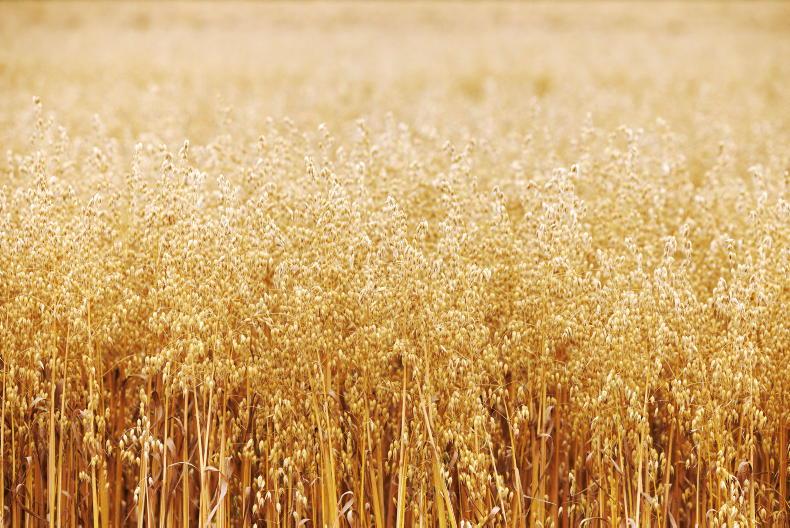
Significant amounts of a product called oat feed are being imported into Ireland.
This comes as at least 50,000t of whole Irish oats from last harvest sat in store and much continue to do so in harvest 2026, which were unsold from harvest 2025.
Earlier this year, the Irish Farmers Journal reported that 16,153t of oats were imported from Latvia into Ireland in 2025. This came from data obtained by the Central Statistics Office (CSO), which is raw data.
The product is described as “oats (excl seed for sowing)”.
From January to May 2026, some 10,084t of the product were imported into Ireland. On further investigation, it emerged that the product is not whole oats and rather a product made from the hulls and waste from oat processing.
The Irish Farmers Journal queried the Department of Agriculture on the product.
The response said: “The Department records imports of feed materials for feed use. For the year to date, records show no whole oats intended for use in feed has been imported from Latvia.”
However, it continued: “The Department can confirm that a constituent product of oats called oat feed (obtained during the processing of oats) was imported from Latvia for feed use.”
The code used to describe the product referred to oats, excluding oat seed.
The Department said: “Declaration of imports and the choice of CN codes on imports is a matter for importers and/or their agents.”
The Irish Farmers Journal understands that this product is commonly used on organic farms. The fact that an oat product is being imported into Ireland when so much native grain sits in store is shocking.
The fact that the waste product from oat processing in another country is being imported to be used in Ireland is no doubt frustrating for tillage farmers who have been told there is no market for oats and who have been discouraged from growing them.
Irish oats have a low carbon footprint and are proven to be carbon neutral when the straw is chopped and incorporated after them.


SHARING OPTIONS