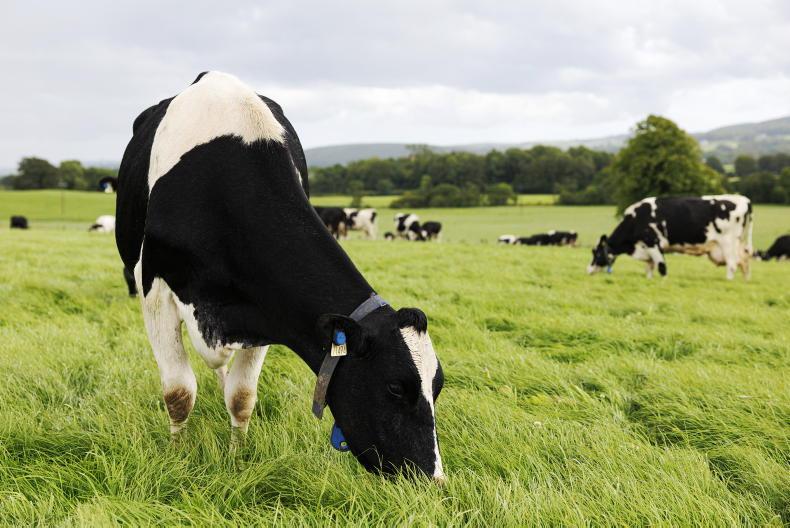
Rapeseed cake has the potential to reduce enteric methane emissions by 9% in beef cattle, according to a new study by Neal Folliard, a PhD student at Teagasc Grange.
This methane reduction was achieved without any negative effects on animal growth, intake, diet digestibility or nitrogen utilisation.
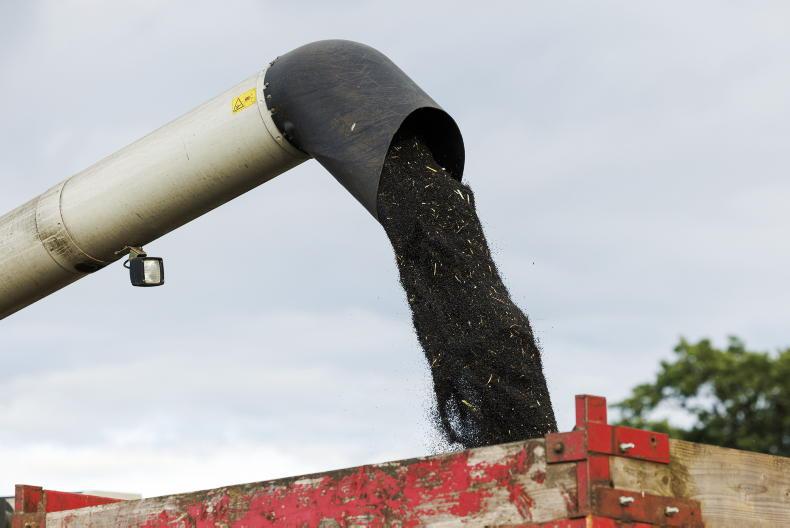
Rapeseed cake is the solid material left behind after oil has been extracted from oilseed rape via cold-pressing.
As a high-protein livestock feed, it has the potential to replace imported protein, especially in the dairy and beef sectors. It is different from rapeseed meal, a by-product when rapeseed oil is solvent-extracted, an industrial method used to maximise oil yield.
The study
The research was conducted on 11-month-old Charolais-cross weanlings in an indoor system for 72 days.
The cattle were fed ad-lib silage alongside 3.7kg of one of three different concentrates; one that included 1.1kg of rapeseed cake, a control that used rapeseed meal and a third concentrate that consisted of the control supplemented with 190g of rapeseed oil.
In addition to this, 1kg of bait pellets were used to encourage the cattle to use the GreenFeed machine that measures their methane output.
The results
The inclusion of the rapeseed cake and oil did lead to slightly higher costs. However, it compared favourably on cost to linseed oil (€1,600/t for linseed oil vs €1,150/t for rapeseed oil), an oil that is attracting a lot of interest as a feed additive to reduce methane emissions.
Neal’s research also highlights that manure from cattle fed with rapeseed cake or oil may be a superior anaerobic digester feedstock with a 53% increase in biomethane production in laboratory analysis that he conducted.
As a natural-based product that is fed as-is, Neal thinks it may be more acceptable to both farmers and consumers as a methane-reducing feed additive compared to other chemical feed additives that are beginning to make their way onto the market too.
Despite the encouraging results, with only 750t of rapeseed cake produced in Ireland in 2024, Neal says there is a long road ahead before this can be rolled out on a large scale.
“Investment in cold-pressed processing is required for large scale use of rapeseed cake,” he says.
He adds that around 59% of oilseed rape is exported from Ireland to the UK for processing, while 99,000t of rapeseed meal is imported into the country every year.
However, with 740,000t of soybean meal imported from outside the EU each year, Neal thinks there is “huge potential to start eating away at that figure by using native protein sources”.
Neal notes that an increase in the tillage area and the area planted to oilseed rape would be required to produce the quantities of rapeseed cake needed for widespread use.
While this study focuses on growing beef animals, Neal says there is lots of research already conducted on including rapeseed cake in finisher diets, where it can even help to improve the fatty acid profile of the meat. A similar methane emissions reduction is seen in dairy cows too; studies have even shown a slight increase in milk yield when rapeseed cake is used.
A stacking effect may also be possible, where an increased level of methane reduction is achieved through pairing the rapeseed cake or oil with oats or another methane-reducing feed additive.