



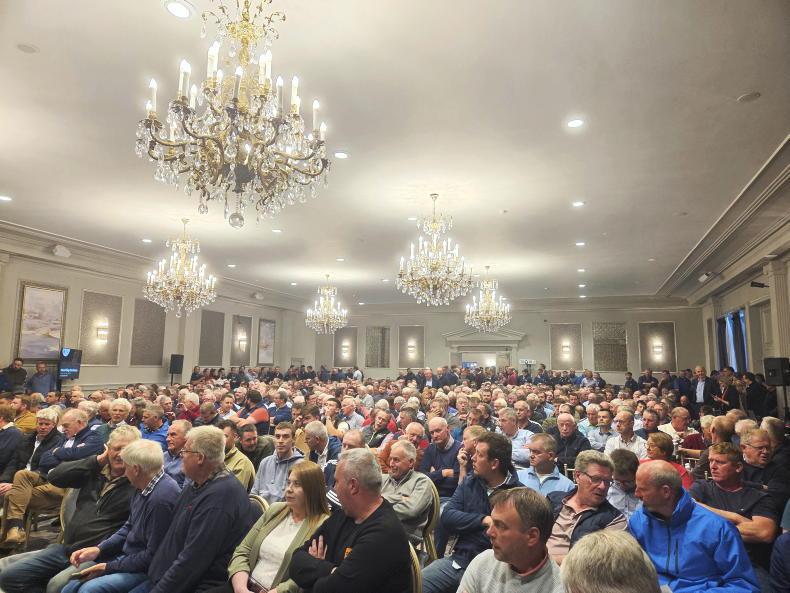
There wasn’t even standing room at the Irish Farmers' Association (IFA) tillage crisis meeting on Friday night.
A traffic jam lined the roadway into the Killashee Hotel, as over 700 people packed the seats, the aisles, the lobby and its surroundings.
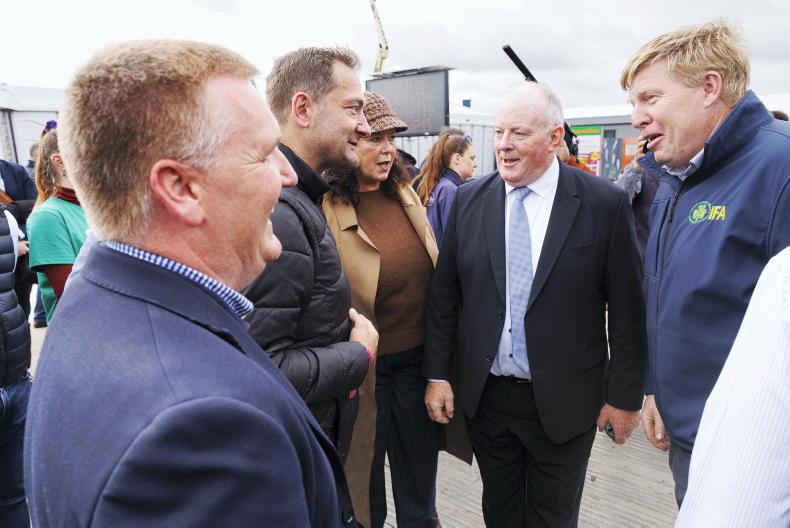
These farmers, IFA president Francie Gorman said, are “really, really concerned about the future”.
Gorman said tillage farmers are competing with imported grain, facing losses of plant protection products and are facing the consequences of how they were treated in the last Common Agricultural Policy (CAP).
The IFA president said that the Government needs to honour its commitments in the Programme for Government and the upcoming budget is the chance to do this.
He said the message has to go back to the Taoiseach, Táinaiste and ministers for finance and public expenditure “that this sector can’t be neglected”.
Fears
IFA grain chair Kieran McEvoy said he fears the tillage sector will be lost.
“Tillage incomes have collapsed since 2023. They’re in freefall,” he said.
McEvoy said the IFA is asking for a €250/ha payment for a five-year period, costing €60m per year.
Chair of the Food Vision tillage group Matt Dempsey, which is a group of stakeholders and was formed by Government, said cash is needed, while adding that Irish grain be given more value for its carbon credentials. He said Irish grain needs to be used in Irish whiskey.
Irish Grain Growers Group chair James Kelly said morale in the tillage sector is at an all-time low.
“It’s absolutely shameful that top-quality oats and beans are being exported from this country.”
He said that 70% of feed imports come from outside of the EU and many are genetically modified.
Massive losses
Shay Phelan of Teagasc said since 2017 fertiliser prices have doubled. Land rental in 2017 was placed at €385/ha and in 2026 is estimated at €792/ha. Meanwhile, the green price for winter wheat was €135/t in 2017 and estimated at €195/t for 2026.
The Teagasc tillage specialist said a 100ha farm on 50% rented land had a gross margin in 2017 of €36,000 and a profit of €500, before subsidies.
By 2026, Phelan estimates this farm will have a gross margin of almost €42,000 and will not make a profit, but will be down €18,000 before subsidies.



SHARING OPTIONS