


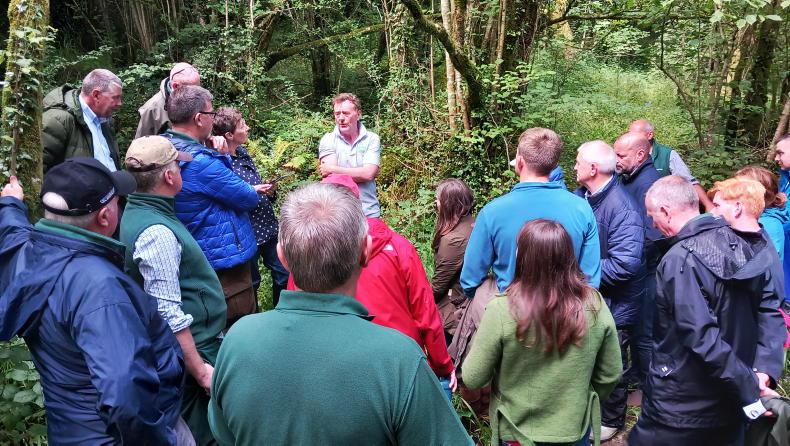
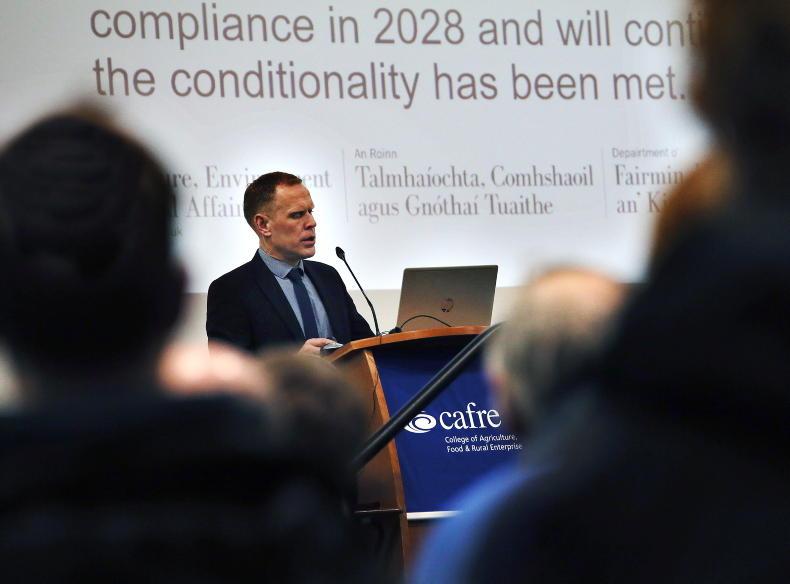
A leading expert on ecology challenged a group of NI farmers to think about land use differently during a recent visit to the west of Ireland.
“There is no such thing as bad land. There is just land that functions in different ways for different purposes,” said Dr James Moran from the Atlantic Technological University.
The discussion was part of a three-day CAFRE Farm Innovation Visit focused on upland biodiversity in the Republic of Ireland (ROI).
Moran explained how the main output of good quality land tends to be food and raw materials, like milk, meat, grain, and straw. There are markets for this produce which provide a financial return to farmers.
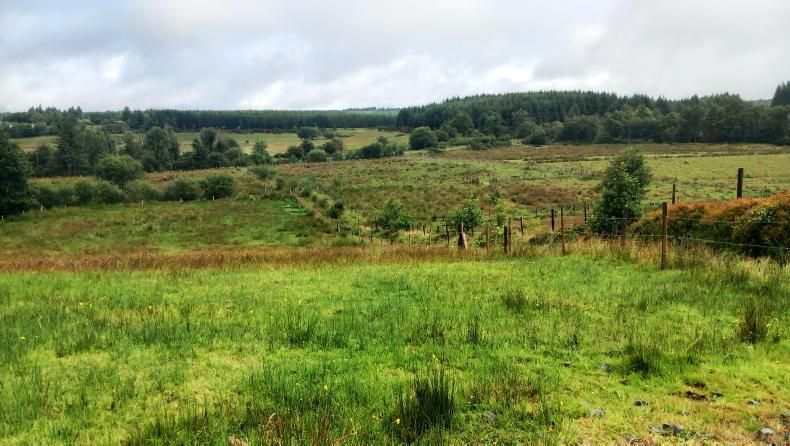
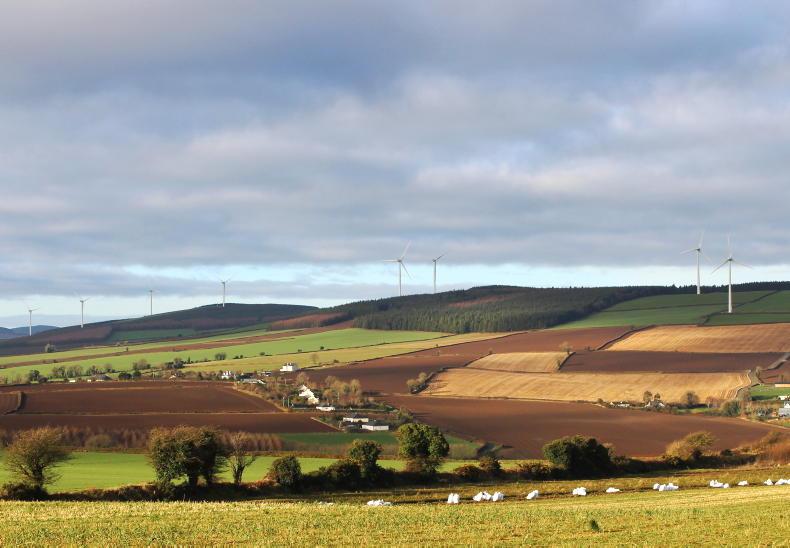
He pointed out that less agricultural output is possible on marginal land, although this type of land can be well suited to providing “ecosystem services”.
This is defined as the benefits that nature gives to humans, and it includes a long list of services, such as flood management, clean air, and carbon storage.
Ecosystem services also include uses that aren’t directly related to the environment and instead provide cultural or social benefits to people, such as recreation and leisure.
The catch is that there is often no direct market, and therefore no financial return, for providing ecosystem services.
If farmers are to get paid for providing these services, it usually has to come from government-funded schemes.
Score-based scheme
Moran gave the example of the Burren Programme in Co Clare where payments to farmers are based on how their land is scored as part of an annual assessment by environmental advisers.
The higher the score, the higher the payment. Money is also available for investments that will help farmers improve the environmental condition of their land, such as fencing and water troughs.
A similar score-based system for environmental payments is now being used as part of the new national agri environment scheme in ROI, known as ACRES.
Moran said that 35% of land in ROI can be described as “high nature value” and is therefore well suited to providing ecosystem services.
“If a cow has a good body condition score, you get paid more by the meat factory. Can we do something similar for land?” he asked.
Importantly, Moran stressed that agri environment schemes must be flexible to help encourage uptake among farmers and to reflect the fact that no two farms are the same.
“It is physically impossible to have a prescription that works for everyone. These payments put a value on the environmental services that land can deliver,” he said.
Cull cows graze moor grass for hen harriers
Aside from the Burren Programme, other local agri environment schemes have been successfully rolled out across ROI.
As part of the Farm Innovation Visit, the group of NI farmers visited Slieve Aughty in Co Galway where a scheme is in place to help increase the number of hen harriers in the area.
Again, this scheme is voluntary, and it has a score-based approach to payment rates.
“I was told how I could make money by managing my land. I wasn’t told I had to do it. I could take it or leave it,” said local farmer Rory O’Reilly.
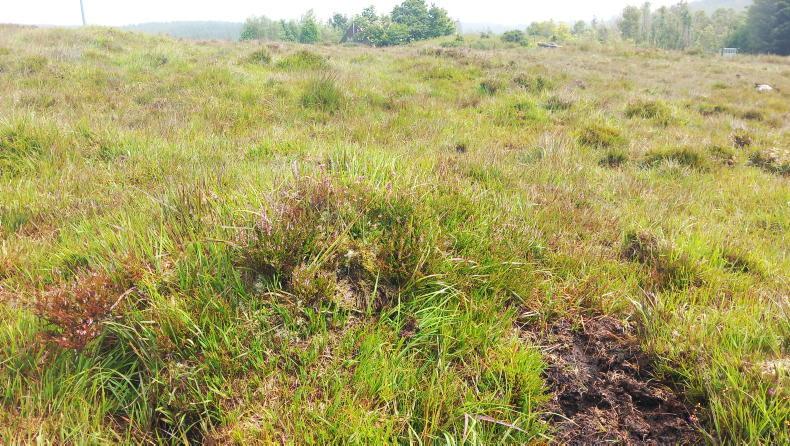
A key focus of the hen harrier project has been to incentivise upland farmers to manage heavy covers of rush and purple moor grass, which is also known as Molinia.
The group visited hill land where Molinia had been successfully grazed back by a small number of cull cows. This type of animal was used because older cattle are better at grazing and digesting stemmy moor grass.
That said, the scheme did not have any requirements on livestock type or breed, stocking rates or grazing dates. Payments were solely based on the environmental score of the land and this rated plant diversity highly.
“If there are more flowers, there are more insects, so there is more food for small birds which means more prey for hen harriers,” said Dr Caroline Sullivan from the project.
The grazing behaviour of the cull cows on the 60-hectare hill is managed with electric fencing and by manipulating the water supply. There are five drinkers with individual shut offs on the site and it was found that cows tend to graze close to the available water.
Sullivan explained that bonus payments of €600 to €1,200 are available to farmers if targets for hen harrier numbers are met in the local area. This provides an extra incentive for scheme participants to provide suitable feeding and nesting habitats, plus it helps discourage shooting.
NI farmers want flexibility in new agri-environment scheme
A Farming With Nature scheme is to be rolled out in NI over the coming years as part of the new package of farm support payments.
The current plan is for a series of “test and learn” trials to be introduced in late 2023 and early 2024, ahead of the full Farming With Nature scheme going live in 2026.
At the end of the trip to ROI, the group of NI farmers summarised their take home messages and highlighted points which could be beneficial in the new Farming With Nature scheme.
Flexibility in how the scheme is designed and rolled out was a common theme. The group was impressed with how agri environment schemes in ROI leave it up to individual farmers to decide how land is managed, as long as environmental improvements are made along the way.
There is a strong desire for farmers to get regular reviews and receive advice, as opposed to having inspections and getting hit with financial penalties.
Keeping paperwork to an absolute minimum and trusting farmers to deliver results within a reasonable timeframe were other popular responses.
Money was an underlying theme in all responses, probably because financially lucrative schemes were available to several of the ROI farmers that the group visited.
For example, one farmer explained that, on top of his Basic Payment Scheme, he was able to claim a €250 per hectare organic payment as well as up to €400 per hectare under the new ACRES agri environment scheme.
If policy makers in NI want Farming With Nature to mirror the success of similar schemes in ROI, they will have to pay for it.



SHARING OPTIONS