Silage fertiliser: With weather and ground conditions improving over the past week, silage fertiliser is only now being spread on many farms. Nitrogen is a key driver of grass growth and is essential to a good silage crop. Aim to apply 100 units/acre of nitrogen on silage fields and 120 units/acre on recently reseeded swards. Recently reseeded swards have a greater ability to use nitrogen and are more efficient at converting nitrogen to grass.
Silage swards will use about 2 units/day so leave about 50 days between application and cutting. Phosphorus (P) and potassium (K) are essential for grass growth and it’s important that silage fields have adequate P and K to grow a good silage crop. Assess your most recent soil sample results to determine what is needed. Cattle slurry can be a very good source of P and K. About 3,000 gallons/acre of cattle slurry will supply sufficient P and K to grow a silage crop. Aim to spread slurry on dull damp days and also spread on very low covers to avoid contamination of silage crop. If fields need to be rolled, roll early to avoid damaging grass. For high-DMD, silage fields need to be grazed off and closed by early April for a May cut of silage.
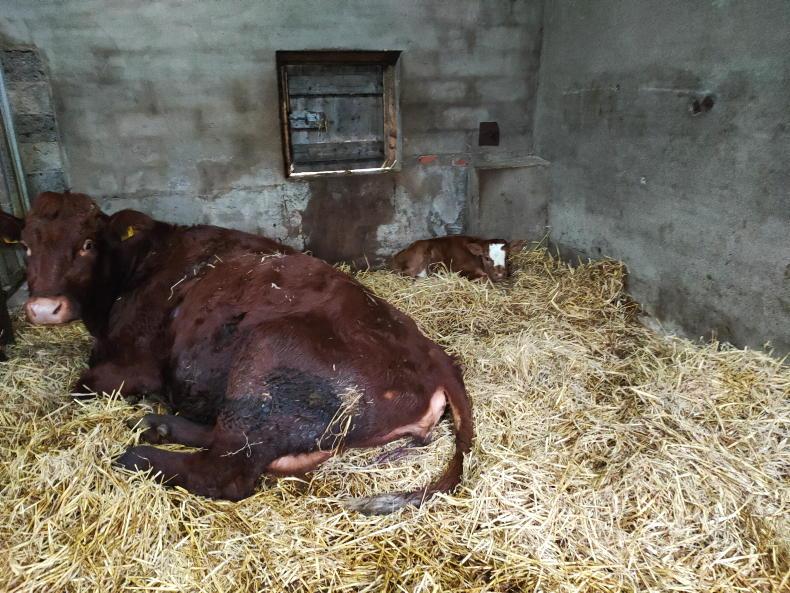
Reducing workload: With ground conditions improving, stock should be moving outdoors this week. This will help ease workload in the yard after a difficult spring. Losing students on Tullamore Farm has meant farm manager Shaun Diver has had to streamline things to reduce labour requirements. This meant moving stock to larger pens with piped water as quickly as possible and moving as much stock as possible over the last few days. On some farms which have late-calving cows in late April or May, it could be an option to let these cows out to eat off grass and kickstart growth. Fertiliser should have been spread on grazing ground at this stage. While nights are still cold, the fertiliser will be available for uptake by grass once temperatures improve. Aim for compound products where P and K is low. Standard urea (unprotected) is fine at this time of year when temperatures are low and there is moisture in the environment. Spreading slurry on grazing ground in dry cold weather is risky as slurry could dry on the grass and contaminate for grazing.
ADVERTISEMENT
Tetany: This week we have some advice on the beef pages to protect cows against tetany. It’s a high-risk period as cows go out to grass for the first time. Make sure you have taken precautions against it. While many rely on high-magnesium licks, it can be hard to gauge intake.
Register for free to read this story and our free stories.
This content is available to digital subscribers and loyalty code users only. Sign in to your account, use the code or subscribe to get unlimited access.
The reader loyalty code gives you full access to the site from when you enter it until the following Wednesday at 9pm. Find your unique code on the back page of Irish Country Living every week.
CODE ACCEPTED
You have full access to the site until next Wednesday at 9pm.
CODE NOT VALID
Please try again or contact support.
Silage fertiliser: With weather and ground conditions improving over the past week, silage fertiliser is only now being spread on many farms. Nitrogen is a key driver of grass growth and is essential to a good silage crop. Aim to apply 100 units/acre of nitrogen on silage fields and 120 units/acre on recently reseeded swards. Recently reseeded swards have a greater ability to use nitrogen and are more efficient at converting nitrogen to grass.
Silage swards will use about 2 units/day so leave about 50 days between application and cutting. Phosphorus (P) and potassium (K) are essential for grass growth and it’s important that silage fields have adequate P and K to grow a good silage crop. Assess your most recent soil sample results to determine what is needed. Cattle slurry can be a very good source of P and K. About 3,000 gallons/acre of cattle slurry will supply sufficient P and K to grow a silage crop. Aim to spread slurry on dull damp days and also spread on very low covers to avoid contamination of silage crop. If fields need to be rolled, roll early to avoid damaging grass. For high-DMD, silage fields need to be grazed off and closed by early April for a May cut of silage.
Reducing workload: With ground conditions improving, stock should be moving outdoors this week. This will help ease workload in the yard after a difficult spring. Losing students on Tullamore Farm has meant farm manager Shaun Diver has had to streamline things to reduce labour requirements. This meant moving stock to larger pens with piped water as quickly as possible and moving as much stock as possible over the last few days. On some farms which have late-calving cows in late April or May, it could be an option to let these cows out to eat off grass and kickstart growth. Fertiliser should have been spread on grazing ground at this stage. While nights are still cold, the fertiliser will be available for uptake by grass once temperatures improve. Aim for compound products where P and K is low. Standard urea (unprotected) is fine at this time of year when temperatures are low and there is moisture in the environment. Spreading slurry on grazing ground in dry cold weather is risky as slurry could dry on the grass and contaminate for grazing.
Tetany: This week we have some advice on the beef pages to protect cows against tetany. It’s a high-risk period as cows go out to grass for the first time. Make sure you have taken precautions against it. While many rely on high-magnesium licks, it can be hard to gauge intake.
If you would like to speak to a member of our team, please call us on 01-4199525.
Link sent to your email address
We have sent an email to your address. Please click on the link in this email to reset your password. If you can't find it in your inbox, please check your spam folder. If you can't find the email, please call us on 01-4199525.
ENTER YOUR LOYALTY CODE:
The reader loyalty code gives you full access to the site from when you enter it until the following Wednesday at 9pm. Find your unique code on the back page of Irish Country Living every week.








SHARING OPTIONS