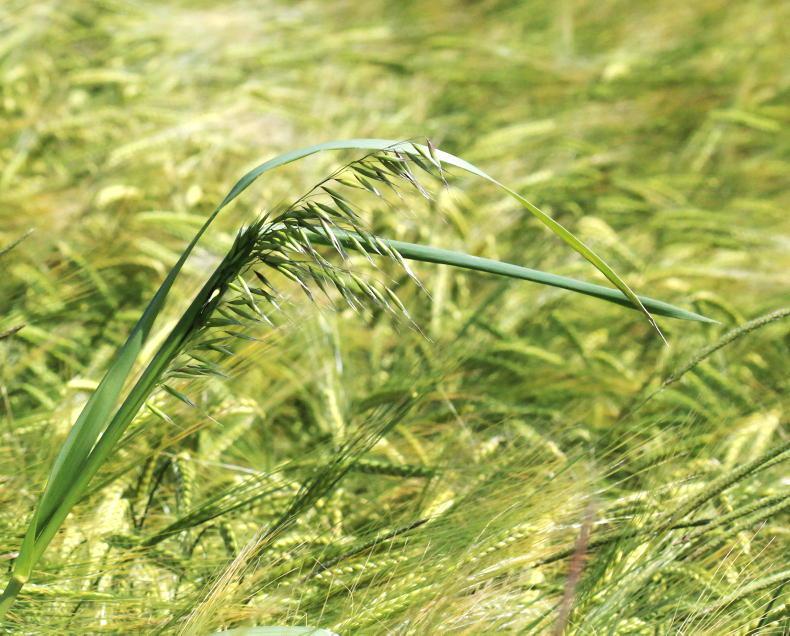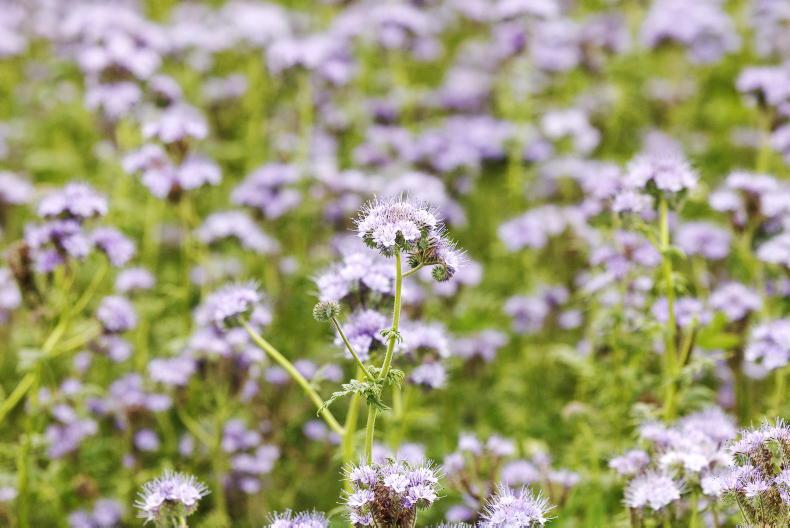
This season the Irish Farmers Journal became aware of cover crop seed that contained grass weeds. A cover crop mix supposed to contain eight plants; contained blackgrass, sterile brome, soft brome and ryegrass.
In total 20 species not listed on the label were identified. The seed was part of a larger batch sold across the country.
Although, within tolerance of seed standards, seed sown from this batch may result in grass weed problems on farms – this could cause serious issues for years to come.
On the back of this, the Irish Farmers Journal sourced cover (or catch as it is sometimes known) crop seed from four farms and seed retailers, and sent these seeds for sampling and testing to the Department of Agriculture’s seed testing laboratory. One was sampled on farm from a sealed bag. As it was late in the season seed was limited.
The testing was carried out to identify other seeds not listed on the label and according to International Seed Testing Association standards. All samples tested were found to have other seeds not listed on the label, ranging from one to 11 species.
What was clear was that cover crop mixes with less species in a mix had fewer other seeds and some seed bags had fewer other seeds than others.
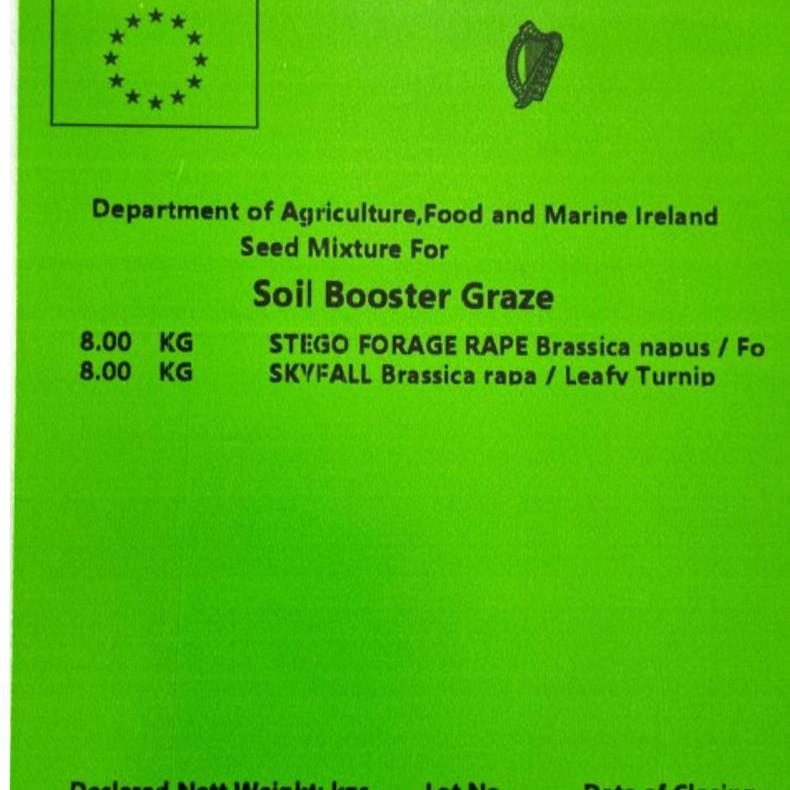
ISTA higher voluntary standard stated on a label.
While other seeds not listed on the label were present in the seed, the mixes were all within EU standards. The majority of cover crop seed is imported from Europe and tolerances for grass weeds and broad-leaved weeds exist in Europe.
In contrast, if the seed was produced in Ireland there would be zero tolerance for blackgrass, wild oats or sterile brome, but as it is imported, we have to allow for the EU tolerance. These tolerances are by weight. So, while the tolerance may be less than 1%, that 1% of the weight of seed in a bag, can add up to large numbers of light cover crop seeds.
It should be noted that even though blackgrass and wild oats are listed as noxious weeds in Ireland, EU tolerances mean the weed seeds can be imported into Ireland despite our definition of those weeds being a threat to agriculture.
Why does it matter?
While cover crops have many benefits, if seed contains grass weeds it is a massive threat to tillage farms. One blackgrass plant can produce 6,000 seeds. If one blackgrass seed is in a bag of seed and it germinates, that can lead to a serious blackgrass problem very quickly. There are no completely successful controls for many grass weeds in tillage crops any more. Farmers can pay for herbicides that will not kill all weeds and in some cases, land will have to go into grassland.
Broad-leaved weeds are less of an issue. There are some difficult to control broad-leaved weeds, but it must be acknowledged that it is almost impossible to control all broad-leaved weeds in a field of cover crop seeds which are also broad-leaved plants. However, cleaning can help with this seed and clearly there are less other seeds in some seed.
Higher voluntary standard
In Ireland, the Irish Seed Trade Association implemented a Higher Voluntary Standard (HVS) for cover crop seeds in 2023. This HVS means the samples from the cover crop seed are tested and declared to be free of blackgrass, sterile brome and wild oats.
HVS seed will have a declaration on the green label supplied by the Department of Agriculture because the Department audits these seed assemblers.
However, not all seed suppliers implement the HVS and this is something farmers need to be aware of.
What do the seed suppliers say?
We tested seed from the three major suppliers of cover crop seed in the country – DLF, Germinal and Goldcrop. Some farmers buy from smaller suppliers and import seed. All seed tested was within tolerance, but did contain other seeds in varying amounts.
DLF
A DLF sample taken on farm and tested by the Department was found to have blackgrass, sterile brome, wild oat, ryegrass, barnyard grass and broad-leaved weeds. A bag sampled and tested by the Department contained a small amount of broad-leaved weeds, ryegrass and foxtail seeds.
The company said: “It is important to understand that no seed lot, regardless of the supplier or species, can ever be guaranteed to be entirely free from other seed types. The EU certification scheme recognises that biological variation and natural seed production processes mean absolute zero contamination is not possible. Instead, certification standards define strict but achievable limits.
“These standards apply uniformly across all EU Member States and ensure that certified seed on the market meets the same legally defined benchmarks for quality and performance. In practical terms, this means that even a small number of non-target seeds in a laboratory test does not indicate a failure of quality or certification.
“It simply reflects the natural limits of biological production and the legal tolerances built into the EU system.
“Certified seed is sampled and tested using controlled, standardised methods. Results based on non-standardised sampling, such as from opened bags or mixed lots, are not representative of the certified product and should not be used to draw conclusions about product quality or compliance.”
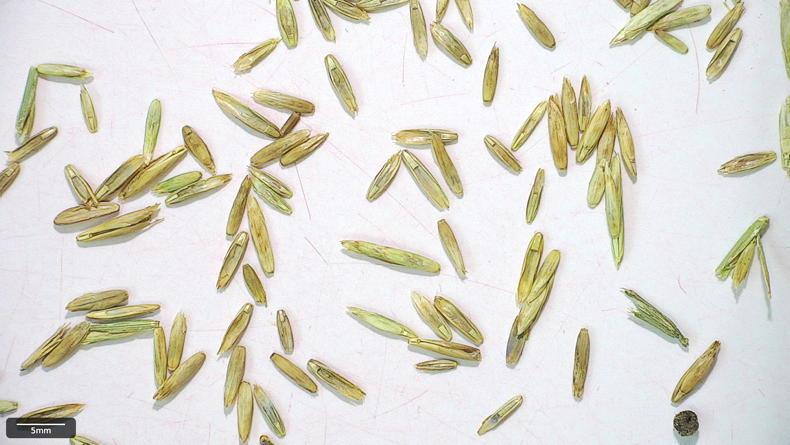
Ryegrass seeds found in cover crop seed at the Department's seed testing laboratory.
Germinal
Germinal’s seeds contained a small amount of broad-leaved weeds and small amounts of ryegrass and wheat seeds. The company said this investigation into cover crop seed is very important and it understands the concerns of growers.
“We have some concerns that these [EU] regulations do not go far enough to protect Irish farmers growing cover crops. For this reason, we also stipulate HVS seed quality criteria on all our purchases.
“We insist that all cover crop seed supplied to us must have HVS ISTA-approved certificates before the seed is shipped to Germinal.
This must be on an official ISTA Orange Certificate – no other certificate is acceptable.
The certificate must state that the seed lot has been sampled in the official manner, and that the sample is free of blackgrass, sterile brome and wild oats. We will not import seed that does not meet these standards,” the company added.
Goldcrop
Goldcrop’s seed contained small amounts of broad-leaved weed seeds. Goldcrop stated that it is a significant supplier of cover crop mixtures and straights to the Irish market.
The company said it is committed to supporting the profitability of arable farmers through many actions including “having the best equipment to process that Irish seed – cleaning, dressing, bagging, etc.
We have invested significantly in recent years in new equipment.
“Where seeds are not produced in Ireland we source from trusted international suppliers. For cover crop seeds we agreed with DAFM in February 2023 to implement a HVS for the purity and germination of cover crop seeds. This is to ensure that damaging weed seeds are not present in any cover crop seeds.”
Goldcrop said there is zero tolerance for blackgrass, wild oats and brome and that seeds must have an orange/ISTA seed test certificate. The company added that small levels of other weed seeds, not including the listed grass weeds, may make their way into seed. They added: “Goldcrop will continue to have the highest vigilance for damaging weed seeds in all imported seeds.”
Inspection and sales
The Irish Farmers Journal queried the Department of Agriculture on the testing, tolerances and trading of cover crop seed.
The Department said all seed must be certified to EU standards before it can be marketed within the EU as a straight, or mixed for a mixture. Third country seed must follow OECD rules.
A spokesperson for the Department said: “There is free movement of certified seed within the EU and the Department is not required to carry out control checks on each consignment of imported certified seed.”
On non-HVS seed the Department said: “Seed that is on the market but not declared as HVS cover crop seed must still comply with EU standards.” This includes a standard for what are termed “other seeds” or seeds of other species as specified in the relevant EU Seed Directive.
“If catch crop seed does not contain the species specified on the label or, it contains other seed species above the tolerance set out in the seed directive, it is in breach of seed marketing regulations. Where catch crop seed is found to be in breach of EU or agreed HVS standards, the Department issues a notice to withdraw that seed from the market.”
The Department’s ACRES seed guidelines recommend the use of certified and HVS seed.
Push from schemes
In ACRES and now the Farming for Water Programme, there has been a massive push towards cover crops to improve soil health, store carbon, provide habitats and take up nutrients from the soil to protect water quality.
ACRES requires at least two species in a catch crop mix and the Farming for Water Programme follows these guidelines. This year, significantly more cover crops were grown in the country due to the Farming for Water Progamme under which 30,476ha were sown. Cover crop seed actually ran out in places and at different times.
When questioned on the contamination of seed the Farming for Water EIP said it is “disappointed to hear that contaminated seed has found its way into the supply chain and hopes that more strict quality control measures can prevent this from happening going forward”.
The EIP also said it “did not engage with the seed suppliers ahead of the catch crops pilot scheme”.
Uptake of the measure surged by 90% with 1,250 applicants in 2025. This was not anticipated and no doubt put pressure on supply chains. The EIP said it expects similar uptake to 2025 in 2026. It also said it will make the project’s 2026 catch crop expectations known to the seed suppliers.
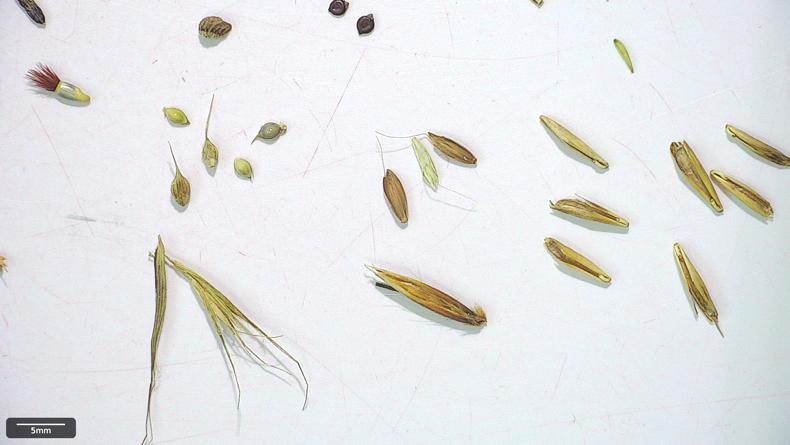
Blackgrass, sterile brome, wild oat and others seeds found in a cover crop seed mix at the Department's lab.
What can be done to prevent
this problem?
The seed industry and Department could improve standards further where possible.Seed could be tested before mixing and in the bag after mixing. At present testing is required before mixing seed for bagging. Irish seed has a zero tolerance for grass weeds in the field and in the bag.The higher voluntary standard (HVS) should not be voluntary. It should be made compulsory for all sellers of seed in the country as some sellers do not implement HVS. HVS should also be displayed more obviously on the seed bags.If a sample is found to contain noxious weeds, even with EU tolerances, it should be recalled. If it is already planted then a buyer beware notice should be issued.Can more cover crop seed be grown in Ireland? It is difficult to bring a lot of these plants to seed here, so it may not be economical for the seed supplier and lead to inconsistent supply.Schemes
More engagement is needed between scheme managers or officials and the seed industry.Cover crop scheme rules should allow farmers to grow just one species. This would make it easier to identify weeds in seed as the seed would be consistent in colour, size and shape.Rules around the number of species in a mix for schemes should be changed immediately.Irish research into cover crop mixes is needed.Herbicides
The Department should allow cover crop fields with suspected grass weeds or resistant weeds to be sprayed off earlier. Allowing suspect fields to be sprayed when growth is good and land is trafficable could prevent some seed return.At present, there is no herbicide with a label to control grass weeds in cover crops. Having a graminicide available for these crops could help to control the problem.What can farmers do?
All cover crops should be sprayed off at destruction time if there is any worry that the seed contained noxious, invasive or grass weeds.Farmers who are concerned that their seed contained grass weeds should consult their sales person.Individual farmers need to purchase seed from trusted sources and should be aware if they buy non-HVS seed or from uncertified suppliers then there might be rogue species in their mixes.Farmers should order seed in advance of planting in order to secure HVS seed.Comment
The Irish seed industry is among the best in the world. We are lucky to have such enthusiastic researchers, assemblers and a rigorous Department inspection system, as well as an association willing to invest in a higher voluntary standard on grass weeds.
This article is not intended to damage that industry, but it is clear that there are issues in some supply chains. EU rules also allow imported seed that doesn’t match Irish standards into our market.
Cover crops have many advantages and the Irish Farmers Journal is a promoter of cover crops, but they are only a valuable tool if not causing other serious problems. Some of the seed found on-farm poses a serious risk, so high-quality seed is essential. All members of the industry have a responsibility to deliver clean seed and farmers have a responsibility to investigate where their seed comes from.
This season the Irish Farmers Journal became aware of cover crop seed that contained grass weeds. A cover crop mix supposed to contain eight plants; contained blackgrass, sterile brome, soft brome and ryegrass.
In total 20 species not listed on the label were identified. The seed was part of a larger batch sold across the country.
Although, within tolerance of seed standards, seed sown from this batch may result in grass weed problems on farms – this could cause serious issues for years to come.
On the back of this, the Irish Farmers Journal sourced cover (or catch as it is sometimes known) crop seed from four farms and seed retailers, and sent these seeds for sampling and testing to the Department of Agriculture’s seed testing laboratory. One was sampled on farm from a sealed bag. As it was late in the season seed was limited.
The testing was carried out to identify other seeds not listed on the label and according to International Seed Testing Association standards. All samples tested were found to have other seeds not listed on the label, ranging from one to 11 species.
What was clear was that cover crop mixes with less species in a mix had fewer other seeds and some seed bags had fewer other seeds than others.

ISTA higher voluntary standard stated on a label.
While other seeds not listed on the label were present in the seed, the mixes were all within EU standards. The majority of cover crop seed is imported from Europe and tolerances for grass weeds and broad-leaved weeds exist in Europe.
In contrast, if the seed was produced in Ireland there would be zero tolerance for blackgrass, wild oats or sterile brome, but as it is imported, we have to allow for the EU tolerance. These tolerances are by weight. So, while the tolerance may be less than 1%, that 1% of the weight of seed in a bag, can add up to large numbers of light cover crop seeds.
It should be noted that even though blackgrass and wild oats are listed as noxious weeds in Ireland, EU tolerances mean the weed seeds can be imported into Ireland despite our definition of those weeds being a threat to agriculture.
Why does it matter?
While cover crops have many benefits, if seed contains grass weeds it is a massive threat to tillage farms. One blackgrass plant can produce 6,000 seeds. If one blackgrass seed is in a bag of seed and it germinates, that can lead to a serious blackgrass problem very quickly. There are no completely successful controls for many grass weeds in tillage crops any more. Farmers can pay for herbicides that will not kill all weeds and in some cases, land will have to go into grassland.
Broad-leaved weeds are less of an issue. There are some difficult to control broad-leaved weeds, but it must be acknowledged that it is almost impossible to control all broad-leaved weeds in a field of cover crop seeds which are also broad-leaved plants. However, cleaning can help with this seed and clearly there are less other seeds in some seed.
Higher voluntary standard
In Ireland, the Irish Seed Trade Association implemented a Higher Voluntary Standard (HVS) for cover crop seeds in 2023. This HVS means the samples from the cover crop seed are tested and declared to be free of blackgrass, sterile brome and wild oats.
HVS seed will have a declaration on the green label supplied by the Department of Agriculture because the Department audits these seed assemblers.
However, not all seed suppliers implement the HVS and this is something farmers need to be aware of.
What do the seed suppliers say?
We tested seed from the three major suppliers of cover crop seed in the country – DLF, Germinal and Goldcrop. Some farmers buy from smaller suppliers and import seed. All seed tested was within tolerance, but did contain other seeds in varying amounts.
DLF
A DLF sample taken on farm and tested by the Department was found to have blackgrass, sterile brome, wild oat, ryegrass, barnyard grass and broad-leaved weeds. A bag sampled and tested by the Department contained a small amount of broad-leaved weeds, ryegrass and foxtail seeds.
The company said: “It is important to understand that no seed lot, regardless of the supplier or species, can ever be guaranteed to be entirely free from other seed types. The EU certification scheme recognises that biological variation and natural seed production processes mean absolute zero contamination is not possible. Instead, certification standards define strict but achievable limits.
“These standards apply uniformly across all EU Member States and ensure that certified seed on the market meets the same legally defined benchmarks for quality and performance. In practical terms, this means that even a small number of non-target seeds in a laboratory test does not indicate a failure of quality or certification.
“It simply reflects the natural limits of biological production and the legal tolerances built into the EU system.
“Certified seed is sampled and tested using controlled, standardised methods. Results based on non-standardised sampling, such as from opened bags or mixed lots, are not representative of the certified product and should not be used to draw conclusions about product quality or compliance.”

Ryegrass seeds found in cover crop seed at the Department's seed testing laboratory.
Germinal
Germinal’s seeds contained a small amount of broad-leaved weeds and small amounts of ryegrass and wheat seeds. The company said this investigation into cover crop seed is very important and it understands the concerns of growers.
“We have some concerns that these [EU] regulations do not go far enough to protect Irish farmers growing cover crops. For this reason, we also stipulate HVS seed quality criteria on all our purchases.
“We insist that all cover crop seed supplied to us must have HVS ISTA-approved certificates before the seed is shipped to Germinal.
This must be on an official ISTA Orange Certificate – no other certificate is acceptable.
The certificate must state that the seed lot has been sampled in the official manner, and that the sample is free of blackgrass, sterile brome and wild oats. We will not import seed that does not meet these standards,” the company added.
Goldcrop
Goldcrop’s seed contained small amounts of broad-leaved weed seeds. Goldcrop stated that it is a significant supplier of cover crop mixtures and straights to the Irish market.
The company said it is committed to supporting the profitability of arable farmers through many actions including “having the best equipment to process that Irish seed – cleaning, dressing, bagging, etc.
We have invested significantly in recent years in new equipment.
“Where seeds are not produced in Ireland we source from trusted international suppliers. For cover crop seeds we agreed with DAFM in February 2023 to implement a HVS for the purity and germination of cover crop seeds. This is to ensure that damaging weed seeds are not present in any cover crop seeds.”
Goldcrop said there is zero tolerance for blackgrass, wild oats and brome and that seeds must have an orange/ISTA seed test certificate. The company added that small levels of other weed seeds, not including the listed grass weeds, may make their way into seed. They added: “Goldcrop will continue to have the highest vigilance for damaging weed seeds in all imported seeds.”
Inspection and sales
The Irish Farmers Journal queried the Department of Agriculture on the testing, tolerances and trading of cover crop seed.
The Department said all seed must be certified to EU standards before it can be marketed within the EU as a straight, or mixed for a mixture. Third country seed must follow OECD rules.
A spokesperson for the Department said: “There is free movement of certified seed within the EU and the Department is not required to carry out control checks on each consignment of imported certified seed.”
On non-HVS seed the Department said: “Seed that is on the market but not declared as HVS cover crop seed must still comply with EU standards.” This includes a standard for what are termed “other seeds” or seeds of other species as specified in the relevant EU Seed Directive.
“If catch crop seed does not contain the species specified on the label or, it contains other seed species above the tolerance set out in the seed directive, it is in breach of seed marketing regulations. Where catch crop seed is found to be in breach of EU or agreed HVS standards, the Department issues a notice to withdraw that seed from the market.”
The Department’s ACRES seed guidelines recommend the use of certified and HVS seed.
Push from schemes
In ACRES and now the Farming for Water Programme, there has been a massive push towards cover crops to improve soil health, store carbon, provide habitats and take up nutrients from the soil to protect water quality.
ACRES requires at least two species in a catch crop mix and the Farming for Water Programme follows these guidelines. This year, significantly more cover crops were grown in the country due to the Farming for Water Progamme under which 30,476ha were sown. Cover crop seed actually ran out in places and at different times.
When questioned on the contamination of seed the Farming for Water EIP said it is “disappointed to hear that contaminated seed has found its way into the supply chain and hopes that more strict quality control measures can prevent this from happening going forward”.
The EIP also said it “did not engage with the seed suppliers ahead of the catch crops pilot scheme”.
Uptake of the measure surged by 90% with 1,250 applicants in 2025. This was not anticipated and no doubt put pressure on supply chains. The EIP said it expects similar uptake to 2025 in 2026. It also said it will make the project’s 2026 catch crop expectations known to the seed suppliers.

Blackgrass, sterile brome, wild oat and others seeds found in a cover crop seed mix at the Department's lab.
What can be done to prevent
this problem?
The seed industry and Department could improve standards further where possible.Seed could be tested before mixing and in the bag after mixing. At present testing is required before mixing seed for bagging. Irish seed has a zero tolerance for grass weeds in the field and in the bag.The higher voluntary standard (HVS) should not be voluntary. It should be made compulsory for all sellers of seed in the country as some sellers do not implement HVS. HVS should also be displayed more obviously on the seed bags.If a sample is found to contain noxious weeds, even with EU tolerances, it should be recalled. If it is already planted then a buyer beware notice should be issued.Can more cover crop seed be grown in Ireland? It is difficult to bring a lot of these plants to seed here, so it may not be economical for the seed supplier and lead to inconsistent supply.Schemes
More engagement is needed between scheme managers or officials and the seed industry.Cover crop scheme rules should allow farmers to grow just one species. This would make it easier to identify weeds in seed as the seed would be consistent in colour, size and shape.Rules around the number of species in a mix for schemes should be changed immediately.Irish research into cover crop mixes is needed.Herbicides
The Department should allow cover crop fields with suspected grass weeds or resistant weeds to be sprayed off earlier. Allowing suspect fields to be sprayed when growth is good and land is trafficable could prevent some seed return.At present, there is no herbicide with a label to control grass weeds in cover crops. Having a graminicide available for these crops could help to control the problem.What can farmers do?
All cover crops should be sprayed off at destruction time if there is any worry that the seed contained noxious, invasive or grass weeds.Farmers who are concerned that their seed contained grass weeds should consult their sales person.Individual farmers need to purchase seed from trusted sources and should be aware if they buy non-HVS seed or from uncertified suppliers then there might be rogue species in their mixes.Farmers should order seed in advance of planting in order to secure HVS seed.Comment
The Irish seed industry is among the best in the world. We are lucky to have such enthusiastic researchers, assemblers and a rigorous Department inspection system, as well as an association willing to invest in a higher voluntary standard on grass weeds.
This article is not intended to damage that industry, but it is clear that there are issues in some supply chains. EU rules also allow imported seed that doesn’t match Irish standards into our market.
Cover crops have many advantages and the Irish Farmers Journal is a promoter of cover crops, but they are only a valuable tool if not causing other serious problems. Some of the seed found on-farm poses a serious risk, so high-quality seed is essential. All members of the industry have a responsibility to deliver clean seed and farmers have a responsibility to investigate where their seed comes from.
SHARING OPTIONS