


This is proving to be a difficult spring. Late last week I travelled through parts of south Kildare to see what was happening in fields there. One of the most striking things was the amount of water that was lying on land, both crop and stubble.
Hungry-looking barley
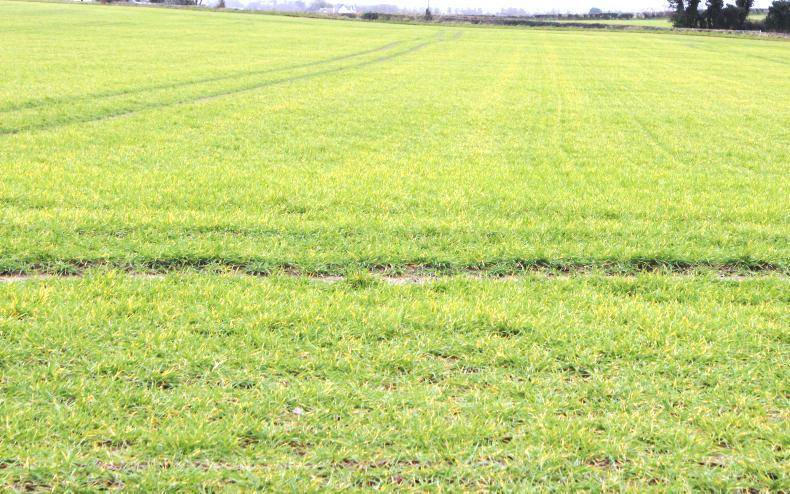
There is a lot of winter barley in that part of the country. These have become quite yellow and I am not sure if they have received nitrogen yet, or not.
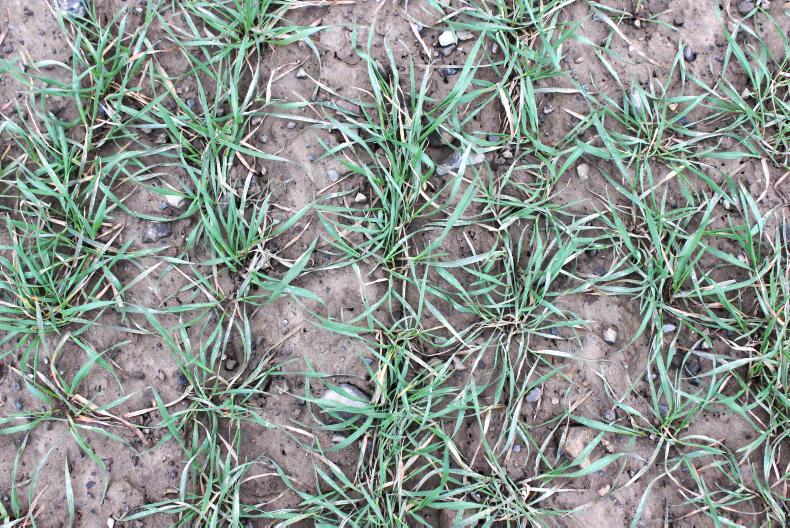
All barley crops appeared to be relatively early sown, with between three and five primary tillers per plant. There was colour variation in most fields, with a lot of leaf death evident.
All the crops I visited were weed free. One field was very wet after the recent rain and was virtually waterlogged in places. This crop varied from almost totally yellow to rank green, so there was obviously good fertility in at least part of the field.
Where the crop was rank green, the leaves were now erect because of the volume of healthy foliage present and there were a few pustules of mildew.
Oats
All of the oat crops I saw were broadly similar in appearance. The ones I walked into had very few weeds present and there was no evidence of recent herbicide.
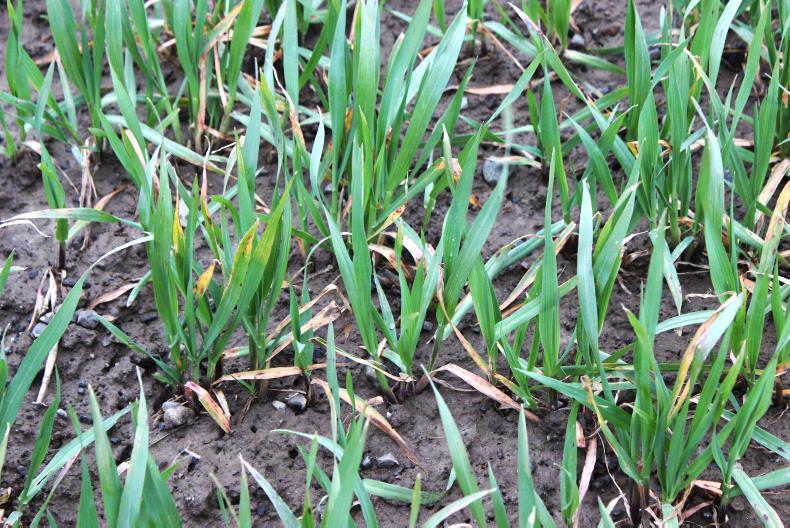
Two things struck me about the crops. One was the amount of dead brown leaf in the canopy and the other was the amount of broken healthy leaves. The latter was probably a result of the recent snow, but the reason for the dead leaves was less certain.
These crops were very erect but they had not moved into stem extension. But the crown or growing point was quite high in the soil, which is a worry when there is frost about.
There were purple patches or lesions on many leaves.
Wheat looking good
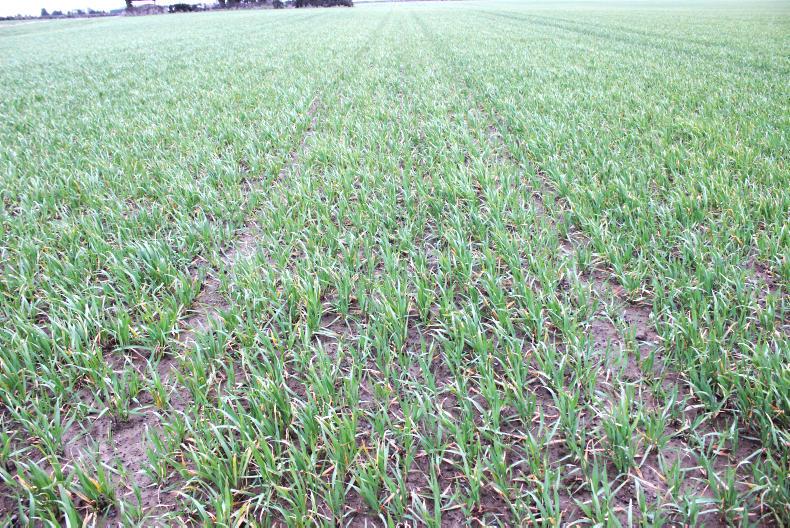
Wheat crops had the biggest spread in planting date with some crops well tillered with others at the two-leaf stage. Some might have been early-October sown – others were closer to December.
Most early-sown crops looked to have been sprayed as they were very free of weeds, with two or three primary tillers.
One crop I walked into was sown early but had not yet received any inputs. This had a lot of weeds, both grass and broad-leaved. It was mainly annual meadowgrass that I saw. The weeds were mainly poppies, shepherds purse and a lot of chickweed. This crop was also at the two to three primary tiller stage or GS22/23.
Another crop I saw was sown much later. This was at the two-leaf stage (GS12) , with a very occasional tiller coming through. There were no weeds of any sort present in this crop yet but one would have to think that they will still come.


SHARING OPTIONS