


The positioning, direction and management of the dairy industry group discussing where next for dairy farmers has a number of fundamental flaws.
Farming sectors talking to each other in isolation will do little good for a national problem.
The dairy industry talking to each other about new milk quotas, with or without compensation, is neither good for the dairy industry, nor reducing Ireland’s greenhouse gases.
The dairy industry must grow in an environmentally friendly way but this is an industry challenge not a dairy-only challenge. We have seen an all-industry approach in the Netherlands and New Zealand.
All farmers are investing in better slurry equipment and slurry storage. All farmers can change and adjust what fertiliser products they spread. All farmers can improve environmental efficiencies.
From talking to members, I understand the talk among Prof Boyle’s grouping is of a per-cow limit and this makes no sense for Irish dairy farmers
Over 90% of dairy farmers also rear younger cattle, either dairy or beef bred – they don’t just have cows.
Prof Boyle must get everyone around the table and get serious on implications and not waste everyone’s time talking about sectors in isolation. He must strive to keep the politics and public relations to the side and get real on addressing the challenge.
From talking to members, I understand the talk among Prof Boyle’s grouping is of a per-cow limit and this makes no sense for Irish dairy farmers.
This approach will send a signal to dairy farmers to go down a high-input route, reduce the competitiveness of the industry and further damage the environmental credentials of dairy farmers.
It would fundamentally change the characteristics that make Irish product different on a world stage.
Surely any capping mechanism must be applicable across all stock groups?
My third point is methane and the difference between biogenic methane and carbon dioxide.
We cannot let the livestock industry be used to buy time for other non-farming sectors
We have seen the developments in Northern Ireland over the last week to establish a separate target for biogenic methane and the science publication Nature further reinforcing the difference in the last week.
We cannot let the livestock industry be used to buy time for other non-farming sectors.
Get the most up to date science on the table. Get the GWP* measure rather than GWP100 as the best, most up to date methane measure irrespective of whether the industry is growing or not.
We only learned lately that the measures used for estimating grazing methane emissions overinflate methane by up to 15%.
We also see the progress at getting feed additives which reduce methane by up to 30% per animal up and going. Don’t impose caps before giving this science a chance in an Irish context.
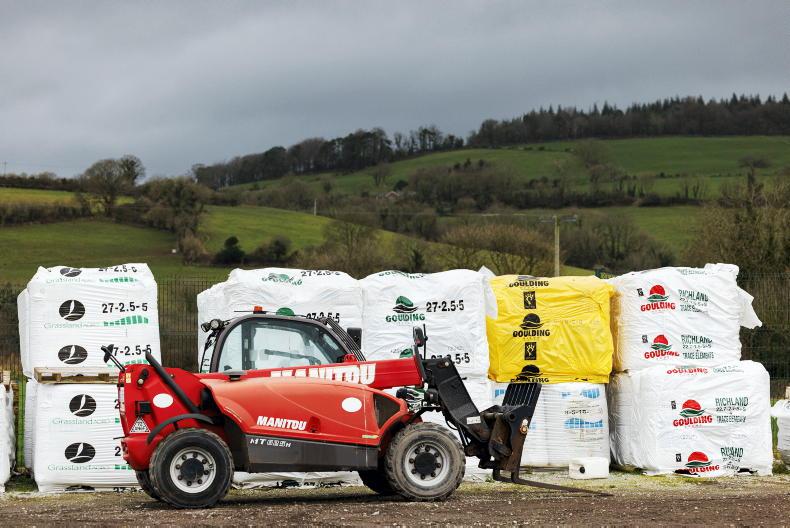
Blanket artificial fertiliser reduction
One of the solutions being proposed seems to be a suggestion to impose a further blanket fertiliser reduction on all dairy farms.
Blanket reductions do nothing for forcing farmers to use better science, or get new initiatives promoted and adopted at farm level.
We still haven’t the fertiliser register up to speed. Let’s get the information at farm level right first.
Surely a move to widespread use of urea and inhibitors is a first step before further blanket reductions?
It’s clear the time for politics is gone and we need clear, coherent, well thought out scenarios and future timelines or we lose the opportunity to shape the industry.
What I hear is that key players including co-op chairs and CEOs are not involved in the process
Talking to some of the members involved in the process to date, there is huge disappointment and apathy at a number of issues associated with the dairy group process so far.
What I hear is that key players including co-op chairs and CEOs are not involved in the process, no proper documentation is circulated in advance of meetings, and poor presentations are displayed when they meet up.
Also the minister and senior department officials seem to have absolved themselves of association with this grouping. We need to get serious on changing farming and flagging timelines for the next generation of farmers.
The group
The Food Vision Dairy Group includes: Conor Ryan and Conor Mulvihill from DII; Joe Crockett from Dairy Sustainability Ireland; John Jordan of Ornua; Stephen Arthur and Tadhg Buckley from IFA; Pat McCormack and John Enright from ICMSA; John Keane of Macra na Feirme; John O’Gorman and Eamonn Farrell of ICOS; Pat Dillon and Kevin Hanrahan of Teagasc; Andrew Cromie of ICBF; Karina Pierce of UCD; David Kennedy of Bord Bia; Mary Frances Rochford of the EPA; David Graham of AHI; and Sinead McPhillips, Maria Dunne and Dale Crammond of the Department of Agriculture.


SHARING OPTIONS