



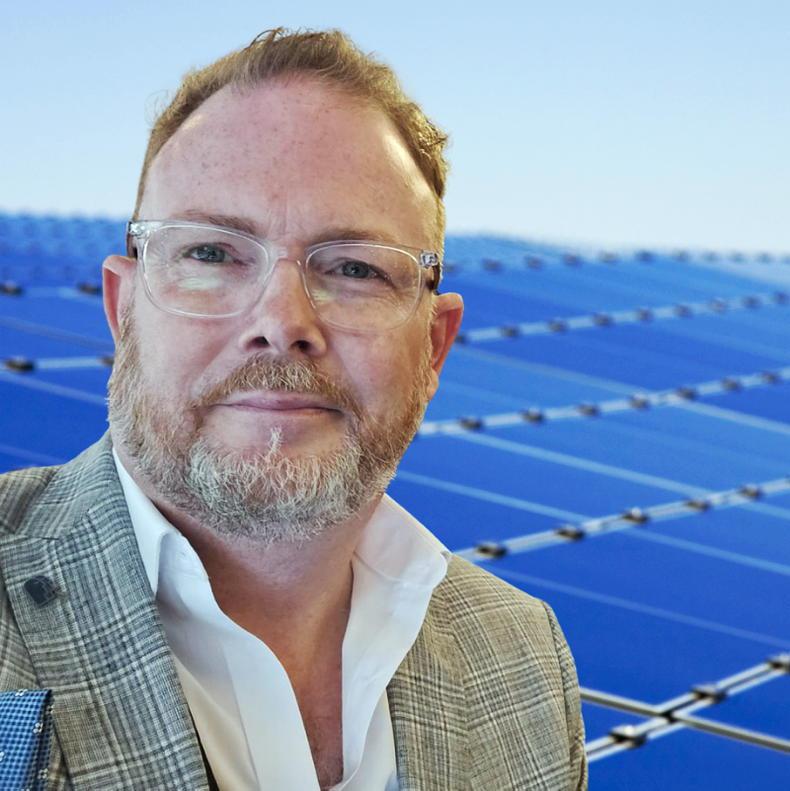
The solar farm industry has now moved out of the development phase and into the deployment phase. This is according to Ronan Power, interim CEO of Solar Ireland.
Speaking to the Irish Farmers Journal at the 2025 Solar Ireland conference, Ronan explained that five years ago most of the industry’s negotiations were with farmers and lawyers, accountants and or banks. Now, they are with engineering, procurement, and construction contractors, as the industry continues to build out its plans.
Ronan explained that most of Ireland’s solar farms are not even in their defect’s liability period; in other words, they are so new, that they haven’t moved into the long-term management stage yet.
What is remarkable is the speed of development. This industry has exploded over the past five years, going from zero to nearly two gigawatts, a quarter of the way to our 2030 Climate Action Plan target.
Lay of the land
Ireland is on track to meet its 2030 target of eight gigawatts of solar capacity. This includes solar farms as well as behind-the-meter systems, such as rooftop and ground-mounted installations.
However, Ireland’s future pipeline is significant. Ronan explained that over the next 15 years, around 22 gigawatts of solar farms are planned. Assuming approximately 3.5 acres per megawatt of solar, that equates to nearly 80,000 acres of solar farms nationwide.
Late to the game
Is Ireland unique in how quickly it is building solar farms? According to Ronan, we were late to the game. In terms of deployment across Europe, other countries are much further ahead of us.
“I would say our current rate is impressive for the size of the island,” he said. “But other countries have gone through a similar ramp-up phase.”
He added that eventually development will plateau and settle into a more normal rate.
Policy support
Minister Darragh O’Brien, who spoke at the conference, is fully supportive of the industry and is working to unblock the challenges the industry is facing, Ronan explained. The minister cited €18bn of investment, which is needed to continued to the deployment of solar farms.
However, regulatory pressures loom. Ireland faces EU scrutiny for delays in mapping renewable energy zones, a requirement under the Renewable Energy Directive (RED III).
Europe is also focused on the Net Zero Industry Act (NZIA), which will influence how public funding is allocated based on where materials are sourced. The European Union is increasingly focused on the origins of these materials, aiming to reduce the bloc’s overreliance on the Chinese market in the solar supply chain. The EU is seeking to diversify this and lessen dependence on a single country, he said.
Electricity grid
Yet again, another key theme from the conference was Ireland’s creaking grid.
“Connecting to the grid is a complicated thing. It’s not an easy task for ESB,” said Ronan.
However, it goes beyond just connecting a solar farm. There are changes needed on the type of connection allowed, such as hybrid connections, batteries, direct connections and private wires. Grid connections a key in determining the locations for solar farms, with projects often having to be large in scale to justify the cost of a connection.
Solar, farming and land use
Asked about concerns that solar farms are taking good agricultural land out of food production, Ronan said: “I think it’s down to the farmer, in terms of what kind of revenue production they want to be in.”
He said that he hasn’t seen any numbers on the impact of solar on tillage specifically, but asked if there was a rethink on using good land for solar, what would be the definition of good? “What land would be defined as being acceptable for solar? Are we having a larger impact by locating solar in one place versus another? Solar farms are a fraction of what’s been deployed in golf courses for example. Are we looking at golf courses in the same way? It’s not that we wouldn’t welcome conversation and debate on the topic, we’d have to understand what we’re trying to achieve” Ronan said.
“What’s the net impact of the solar farm deployment in terms of food production? It’s probably a little bit early to take a position to say no, the impact significant. Is the impact significant today, or is it going to be significant in 20 years?” he added.
Rooftop ignored?
With all of the focus on solar farms, we asked Ronan why was rooftop solar fwas not being given the same precedence?
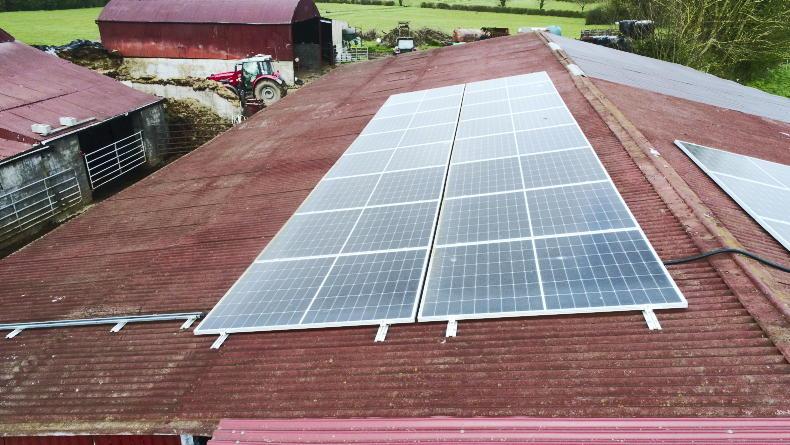
“I couldn’t agree more,” he said when asked why every farm shed isn’t already covered in panels. “The roof of a shed is an asset, and it’s doing nothing except keeping cattle dry. Rooftop solar is cheaper per kilowatt than ground-mount. It’s wasted real estate” he said.
EU regulations will soon require new buildings to integrate solar as standard, and Ronan believes Ireland should get ahead of that curve. Yet, high grid connection costs, for rural connections, remain a stumbling block for many farmers.
This again comes back to scale he said. He said that, if you look at a farmer trying to develop a 500-kilowatt or one-megawatt solar farm as a supplementary revenue source alongside existing farming activities, an up-front grid connection cost of, €200,000 for example, is a huge amount relative to the future cash flows of that asset.
However, for a larger project, say a 10-megawatt solar farm covering 30 to 40 acres, that same €200,000 can be absorbed much more easily due to the scale, he said.
These costs are indeed prohibitive, and the number one barrier to getting solar farms built is the cost of connecting to the grid Ronan explained. Scale is essential to make the economics work.
Click to listen to the full interview with Ronan Power.


SHARING OPTIONS