Irish grain is at the core of J Grennan and Sons business which now produces about 200,000t of animal feed each year, employs 170 staff and an expansion project of €4m will see 26 new bulk out-loading facilities and extra storage to improve efficiency.
The mill was built from the philosophy that they would feed what the founder, John Grennan was feeding his cattle at the time.
If he wouldn’t feed it to his animals, it wouldn’t go through the mill. From small beginnings, the mill now basically runs 24/7 with a short stop each week for maintenance.
It’s a major operation and one that has been built on local feed ingredients and local customers.
Michael Burke, the operations and purchasing manager at Grennan’s is proud to say “we’ve 100% use of Irish grain in terms of oats, barley, wheat and beans”.
“We have to use maize because it is a very important ingredient within the whole system. The grain [wheat, barley and oats] has to be Irish and we insist on it being Irish.”
Speaking on the Irish Farmers Journal’s Tillage Podcast Michael explained that Grennan’s is based in a grain growing area and its location is an advantage to access grain from the local catchment and from other counties.
“We’re supporting a circular economy,” he said.
“We’re very well supported by our customers, who are buying our feed. We are buying back grain from other merchants who are also selling our feed.
“Farmers in Wexford, Carlow, Kilkenny are actually buying our feed but they’re also part of our raw material source because we are buying grain from those merchants that are buying
our feed.
Conor Condron is a sales manager based in Rath and said: “We’re supporting the people that support us. In order for Grennan’s to do well, farmers have to be doing well.
“We want to support the people who support us. Irish grain is probably top of that list.”
Grennan’s as a business is very aware of the challenges facing tillage farmers financially at present and said that having minimum-inclusion rates as part of bonus schemes for meat and milk would be a help.
They think that the low carbon footprint of that grain is currently undervalued.
Conor said the narrative needs to be changed on carbon to talk about the carbon produced for every kilo or tonne of food.
“If, down the line, tillage farmers become under so much pressure to reduce their carbon footprint that yields suffer or production suffers, then that production is lost here, but it’s going to be made up somewhere else and that somewhere else is more than likely going to have a much higher carbon footprint than the grain that’s
produced here.
“We’re all under the one sky in terms of carbon emissions so I don’t see the benefit in punishing farmers here to reduce their carbon footprint.
“That’s having a negative effect on overall global warming.”
Grennan’s sell a ration that is 75% Irish and both agreed that it is selling best in tillage-dominated areas where farmers with tillage or with tillage neighbours are choosing to buy an almost
Irish ration.
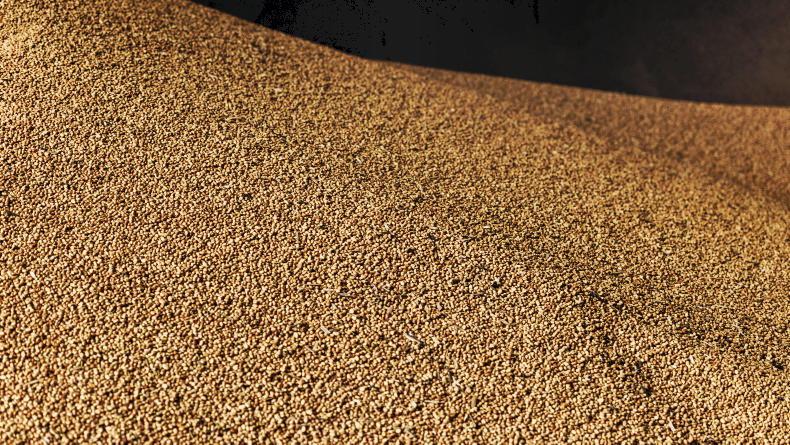
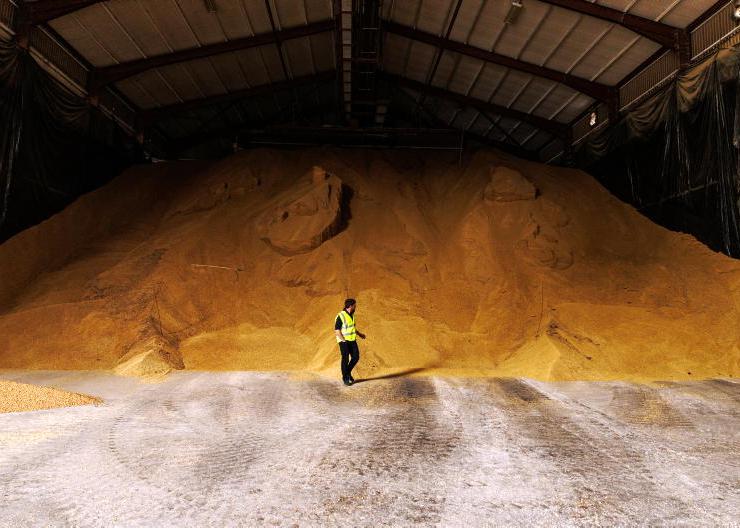
Irish beans in Grennan's. \ Philip Doyle
It is clear from talking to these feed experts that there is a job of work to be done on educating farmers on what is in their feed rations, not to mind where it comes from.
That change needs to come through increased research into Irish ingredients and more promotion of Irish ingredients and their sustainability from feed mills and the industry.
Conor noted that the industry needs to be supported in order for the tillage sector to survive and provide feed and straw to the livestock sector.
This year many Irish products have been left in stores around the country and demand has been poor for Irish grain and protein. On this, Michael proclaimed: “We’re the opposite. We would have more than doubled our oat usage this year.
“Not because it was cheap, but because it was there and needed to be used and it was an Irish product and it suited us. We’ve had no issues.
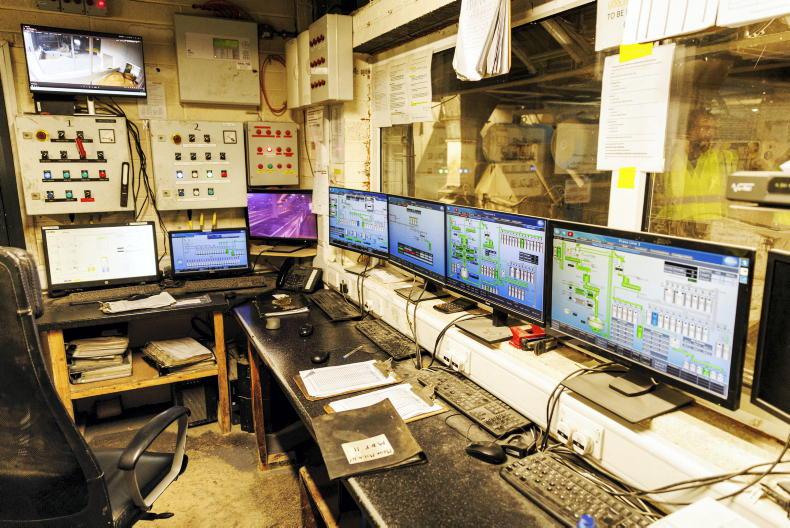
The control room at the mill keeps everything running in order. \ Philip Doyle
“There is a kind of a myth there. If people think about oats, years ago the horses that were doing the ploughing were fed on oats because of energy. There is a lot of work I think should be done on oats as a product.”
Conor noted that the performance of oats on farms is not adding up to what is in the data and more research is needed into the feeding value of oats.
Grennan’s purchases large amounts of Irish beans and while there can be difficulty grinding the beans, it is not a big issue.
“As a raw material and a source of protein how much better can we get. We’re putting them in at 10, 12, 14% and there is no issue whatsoever,” Michael added.
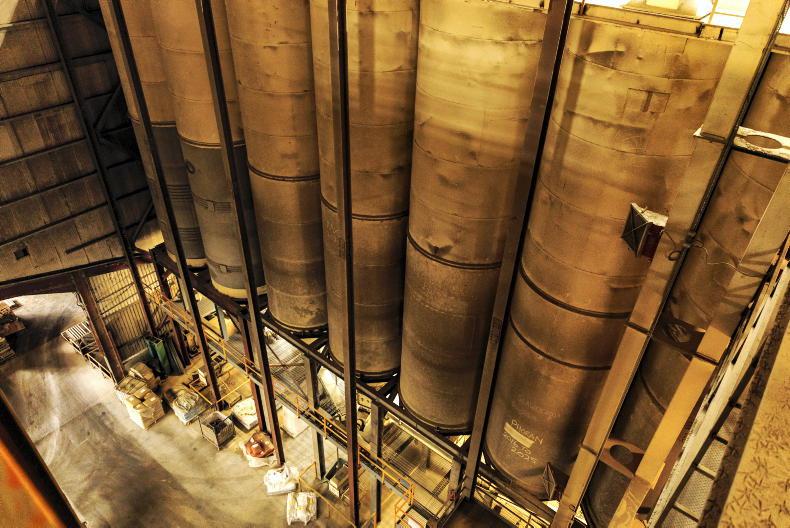
Grain and feed silos at Grennan's mill. \ Philip Doyle

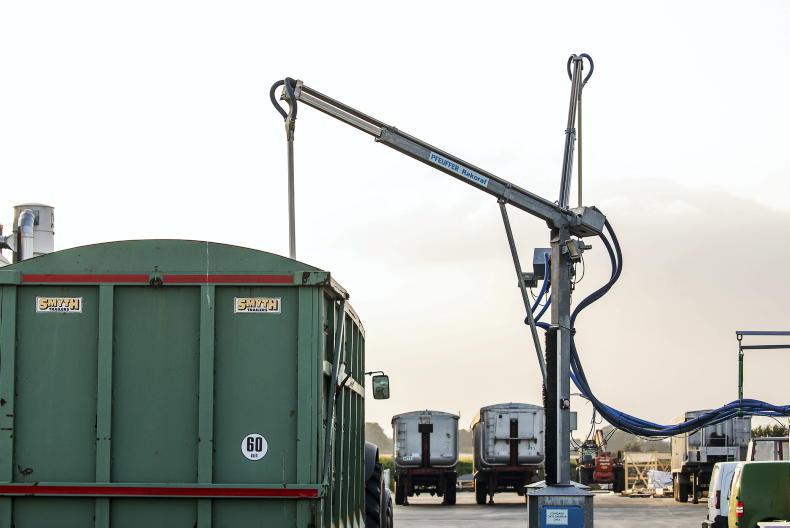
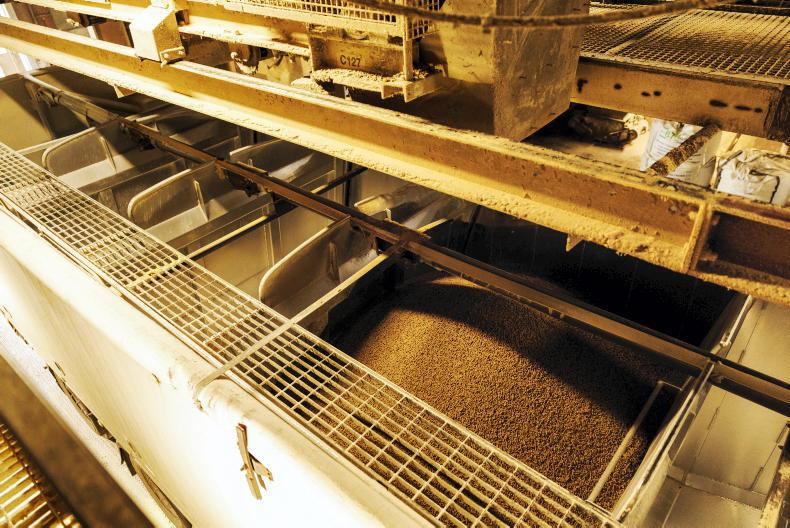
A lorry being filled at Grennan's mill.. \ Philip Doyle
Irish grain is at the core of J Grennan and Sons business which now produces about 200,000t of animal feed each year, employs 170 staff and an expansion project of €4m will see 26 new bulk out-loading facilities and extra storage to improve efficiency.
The mill was built from the philosophy that they would feed what the founder, John Grennan was feeding his cattle at the time.
If he wouldn’t feed it to his animals, it wouldn’t go through the mill. From small beginnings, the mill now basically runs 24/7 with a short stop each week for maintenance.
It’s a major operation and one that has been built on local feed ingredients and local customers.
Michael Burke, the operations and purchasing manager at Grennan’s is proud to say “we’ve 100% use of Irish grain in terms of oats, barley, wheat and beans”.
“We have to use maize because it is a very important ingredient within the whole system. The grain [wheat, barley and oats] has to be Irish and we insist on it being Irish.”
Speaking on the Irish Farmers Journal’s Tillage Podcast Michael explained that Grennan’s is based in a grain growing area and its location is an advantage to access grain from the local catchment and from other counties.
“We’re supporting a circular economy,” he said.
“We’re very well supported by our customers, who are buying our feed. We are buying back grain from other merchants who are also selling our feed.
“Farmers in Wexford, Carlow, Kilkenny are actually buying our feed but they’re also part of our raw material source because we are buying grain from those merchants that are buying
our feed.
Conor Condron is a sales manager based in Rath and said: “We’re supporting the people that support us. In order for Grennan’s to do well, farmers have to be doing well.
“We want to support the people who support us. Irish grain is probably top of that list.”
Grennan’s as a business is very aware of the challenges facing tillage farmers financially at present and said that having minimum-inclusion rates as part of bonus schemes for meat and milk would be a help.
They think that the low carbon footprint of that grain is currently undervalued.
Conor said the narrative needs to be changed on carbon to talk about the carbon produced for every kilo or tonne of food.
“If, down the line, tillage farmers become under so much pressure to reduce their carbon footprint that yields suffer or production suffers, then that production is lost here, but it’s going to be made up somewhere else and that somewhere else is more than likely going to have a much higher carbon footprint than the grain that’s
produced here.
“We’re all under the one sky in terms of carbon emissions so I don’t see the benefit in punishing farmers here to reduce their carbon footprint.
“That’s having a negative effect on overall global warming.”
Grennan’s sell a ration that is 75% Irish and both agreed that it is selling best in tillage-dominated areas where farmers with tillage or with tillage neighbours are choosing to buy an almost
Irish ration.

Irish beans in Grennan's. \ Philip Doyle
It is clear from talking to these feed experts that there is a job of work to be done on educating farmers on what is in their feed rations, not to mind where it comes from.
That change needs to come through increased research into Irish ingredients and more promotion of Irish ingredients and their sustainability from feed mills and the industry.
Conor noted that the industry needs to be supported in order for the tillage sector to survive and provide feed and straw to the livestock sector.
This year many Irish products have been left in stores around the country and demand has been poor for Irish grain and protein. On this, Michael proclaimed: “We’re the opposite. We would have more than doubled our oat usage this year.
“Not because it was cheap, but because it was there and needed to be used and it was an Irish product and it suited us. We’ve had no issues.

The control room at the mill keeps everything running in order. \ Philip Doyle
“There is a kind of a myth there. If people think about oats, years ago the horses that were doing the ploughing were fed on oats because of energy. There is a lot of work I think should be done on oats as a product.”
Conor noted that the performance of oats on farms is not adding up to what is in the data and more research is needed into the feeding value of oats.
Grennan’s purchases large amounts of Irish beans and while there can be difficulty grinding the beans, it is not a big issue.
“As a raw material and a source of protein how much better can we get. We’re putting them in at 10, 12, 14% and there is no issue whatsoever,” Michael added.
Grain and feed silos at Grennan's mill. \ Philip Doyle

A lorry being filled at Grennan's mill.. \ Philip Doyle
SHARING OPTIONS