After a major rainfall event more than a decade ago, German farmer Gerd Möhren decided to phase livestock out of his generations-old 70ha holding to grow miscanthus alongside his arable operation.
From the outset, he identified several advantages to growing the unique, tall, woody grass with high biomass potential that others, including his enterprising father, did not initially see.
It could heat his home, provide new bedding for horse owners, and potentially prevent his farm – located at the bottom of a steep valley in Bengen, in the district of Ahrweiler in Rhineland-Palatinate, about 30km south of Bonn – from future flooding risks.
Then, after a torrential rainstorm in the spring of 2012, which resulted in large amounts of humus-rich top soil being washed from erosion gullies of up to one metre deep that had formed on sloping maize fields surrounding Gerd’s farm and the local village of 500 inhabitants, he knew the time had come to fully commit to his vision.
Speaking to the Irish Farmers Journal during a visit to his farm with the European Network of Agricultural Journalists, the pioneering farmer reflected on his experience after selling the last of his 250-300 head of cattle in 2017.
“I had a normal farming system with cattle, but for the future the investment seemed too high, buying was very expensive, and I don’t have children, so I thought maybe it’s better to get out of livestock.
“Now it’s only wheat and miscanthus. I have 70ha on the farm, with 7ha in miscanthus.
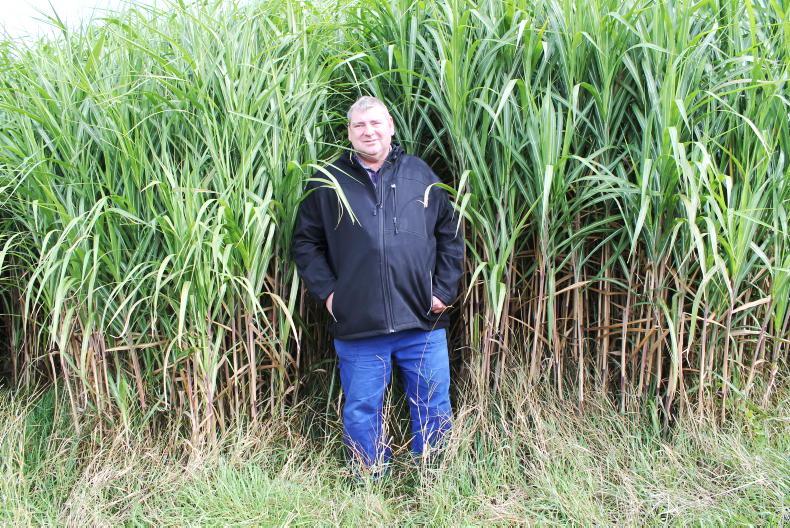
“I have very good soil, and we have rainfall of 650mm per year. It is possible to make every fruit, wheat, or sugar beet here. The good soil is the reason why the miscanthus is very high here as well; it grows three to four metres tall.
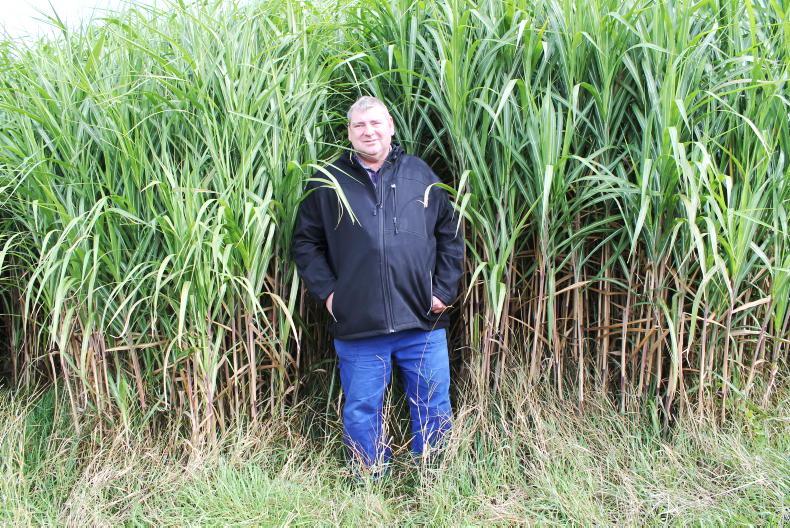
“I planted the field behind me in 2012 because of heavy rainfall, which caused a lot of flooding damage to my farm and neighbours’ houses. We had a big problem on the surrounding fields, the soil and water flooded our homes. A technical protection was planned for the village, but it worked out to be very expensive and difficult. I thought it would be much cheaper to plant a miscanthus field.”
Miscanthus, which is a perennial grass, can store extremely large amounts of water and therefore offers, among other things, protection against flooding.
“I started by planting a strip of miscanthus across the slope, which has since prevented severe erosion. The miscanthus protected our houses from the last heavy rainfalls in 2016 and 2021.
“The villagers are very glad about it. It’s not the only solution, but it is a little part of the puzzle,” he said.
Miscanthus, commonly known as Chinese silver grass, is harvested in spring, with the crop remaining productive for 20 years, though harvesting is only possible from the second year of cultivation onward.
Gerd, who established his crop without subsidy, mainly markets the chopped material as bedding for horse owners and a growing substrate for strawberries and other potted crops. Miscanthus can also be used as a building material, in paper production, and as a fuel source.
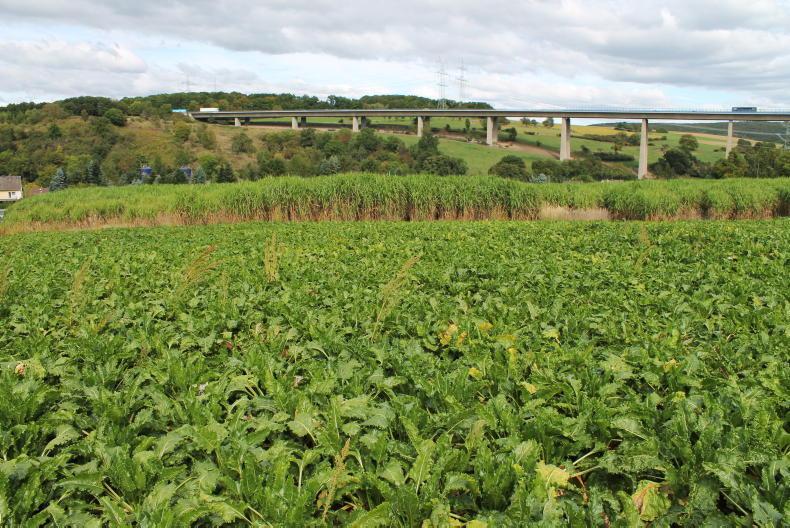
Miscanthus crops protecting the village of Bengen on Gerd Möhren’s farm. \ Claire Mc Cormack
“You have one big starting price for miscanthus; it’s about €4-5,000 per hectare, but you must do it for 20-25 years because you have 20 years’ harvest.
“Miscanthus has a very big root system; it goes deep and to the sides. When you grow it, the roots look like ginger. You put one to two per square metre in the soil, which sounds like a small amount, but it grows and builds a big circle in front of the roots.
“During my first year I also bought some miscanthus product to start a small market, instead of waiting two years until my biomass was ready. I wanted a system that would allow me to grow and move quickly.
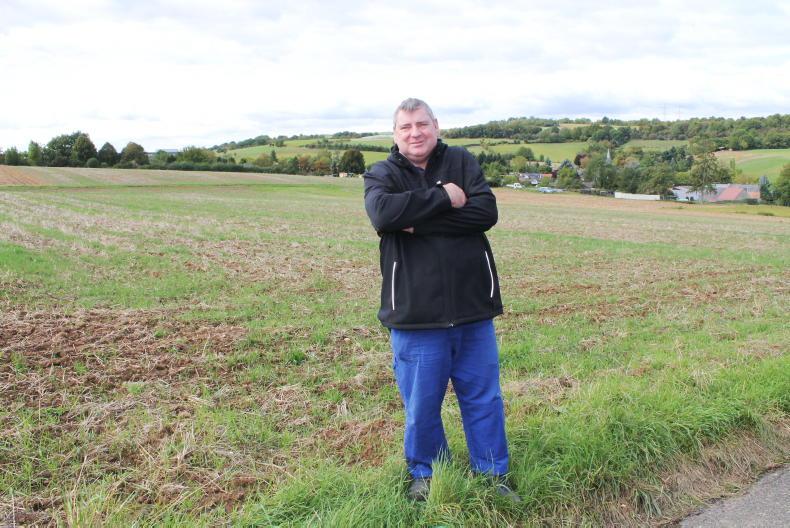
Miscanthus farmer Gerd Möhren pictured in steep fields overlooking his farm and village in Bengen. \ Claire Mc Cormack
“It was delivered in a big truck that couldn’t fit down the very narrow road to my farm. The driver tipped it out in front of my house. Then came a really big rain. I thought it was a disaster, that the miscanthus would be destroyed. But it wasn’t. Just the surface layer was wet; all underneath was completely dry. So straight away I knew rain was not a problem.
“I spoke to horse owners who didn’t know miscanthus could be used as bedding. It is used in other places in Germany, but here there was no knowledge about it.
“I asked if they could use it for one time to see what they think. They found it very good, soft and dry for the horses, with no ammonia smell in the stable.
“Now I have 15-20 customers within a 30km radius. Some want a big package; others want one truck every week.”
For Gerd, the early investment, initial uncertainties and questioning looks, have ultimately paid off.
“The first year was more work than money, but over time it’s possible to make good money.
“We have a very good price for miscanthus now [speaking in late September 2025], while the price for wheat or sugar beet is very low.
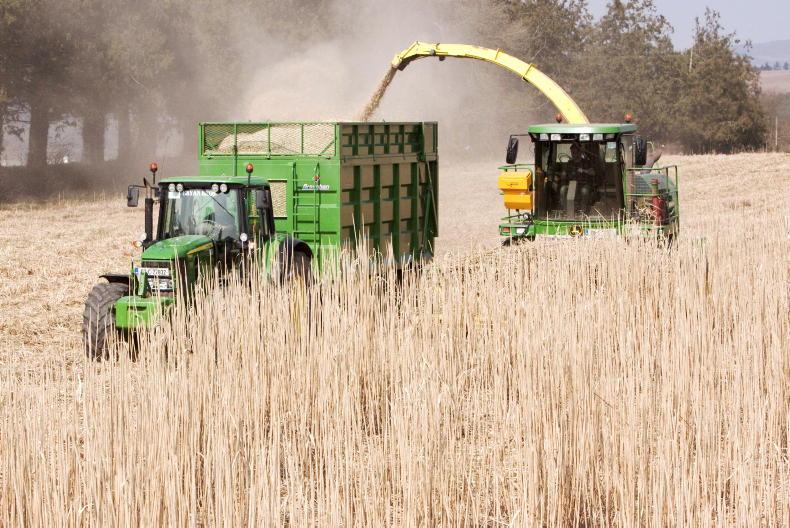
“In April when we harvest, the miscanthus will be very brown and very dry, so we will machine harvest it. We’ll store it in a hall to protect it over the winter.
“The only challenge is that miscanthus has a very big volume – one tonne of eight cubic meters. But because you only harvest once a year, as a farmer you have time to make your own market and get a better price.
“The price in 2025 was €200-250/t or maybe €300/t. If you’re less fortunate, maybe €150/t.
“It also depends on how you sell it. If you get a big transporter, it’s much cheaper, but if you package it as a farmer and distribute it, that makes it more expensive.”
Gerd collaborates with University of Bonn scientists, providing his miscanthus fields for trials on cultivation and heavy rainfall protection. The “MisKa-Re” project is investigating how miscanthus may reduce surface runoff compared to conventional arable land due to its longer vegetation periods, deep roots, dense mulch and increased earthworm activity.
Asked why he thinks more farmers have not yet adopted planting miscanthus, Gerd replied: “In Germany we say, ‘What the farmer doesn’t know, he doesn’t eat.’ Growing miscanthus is a little bit new or different, and it is very expensive to get started. But you can split it over the years; that is difficult to understand for some farmers.
“You must also be a marketer; selling the product is your problem. You must have a system to make money with it, but the farmer often doesn’t know how to do that.”
Gerd, who intends to expand his miscanthus production, hopes that the potential of miscanthus in flood protection will be recognised by the local municipality and even lead to remuneration. For him, this would be confirmation of his concept.
“Innovation doesn’t work in practice if farmers don’t implement it. Miscanthus has provided new security for my farm and the local community; it has given us another leg,” he concluded.
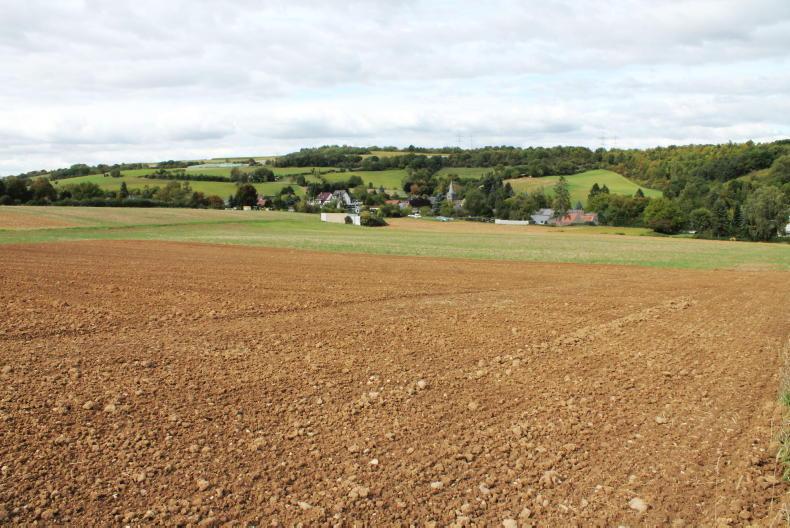
Steep fields surrounding the village of Bengen, in the district of Ahrweiler in Rhineland-Palatinate, about 30km south of Bonn. \ Claire Mc Cormack
Miscanthus mix set to replace peat for German growers
Researchers in Germany believe a combination of miscanthus, compost and coconut fibres can provide a sustainable alternative to peat substrate for the country’s fruit and vegetable growers.
The positive results are emerging at the Institute for Crop Sciences and Resource Conservation at the University of Bonn, where trials on miscanthus as a substrate have been ongoing since 2015.
It comes as the German government says peat levels in food production must be reduced by 50% by 2030 under environmental targets.
Although each potential substrate has unique challenges, speaking to the Irish Farmers Journal, Dr Thorsten Kraska, lecturer at the Institute for Crop Sciences and Resource Conservation at the University of Bonn, explained why he believes miscanthus can play a key role in future advanced substrate mixes.
“Everyone is searching for a resource that is on a big scale, easily available and constantly of quality.
“Now we are thinking the best solution is a mixture of miscanthus and compost, with a small amount of coconut fibres to capture enough water to develop the plant.
“Miscanthus can be produced here in Germany on a large scale. Each hectare will produce around 20-25t of dry matter each year.
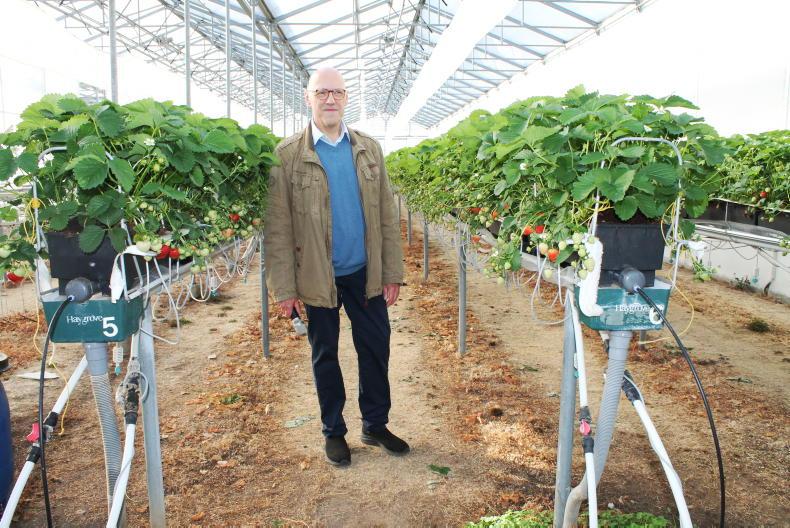
Dr. Thorsten Kraska pictured in greenhouses at Campus Klein-Altendorf of the University of Bonn, where trials on miscanthus substrate are taking place. \ Claire Mc Cormack
“We calculated what the cost would be. Assuming that one metre of strawberry production would cost roughly €1 of substrate, you would have €10,000 per hectare. With miscanthus compost material, we estimate a cost of €0.75 per metre, so that is 25% cheaper.”
While Dr Kraska says it will take at least another 10 years to get the research right on food production using miscanthus as a substrate, he says “a tailored supply chain” also needs to be built.
“For complete sustainable use of miscanthus, we need to think about what we do with the substrate after it has been used.
“We need a grower producing and processing the miscanthus, a grower willing to use it, and a third actor willing to recycle the waste—that will be the future.
“But this is not the thinking at the moment because everyone is trying to optimise their processes – people don’t want to pay to optimise their own process and also pay extra to recycle it again; that is an economic problem we must address.
“Miscanthus is not the only solution; we have several other choices. I’m confident that in two to three years the industry will produce a substrate that is available on a large scale, and you can produce tomatoes, strawberries, or any kind of crop you’d like.”
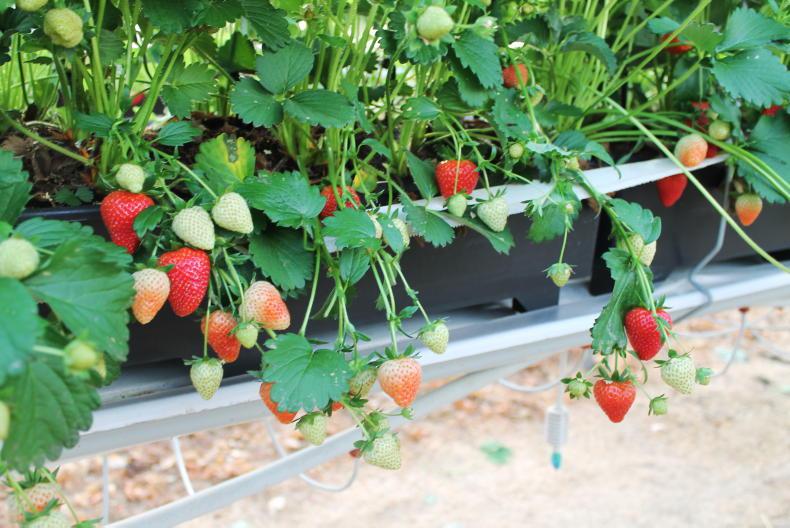
Strawberries growing in a miscanthus and compost substrate mix at Campus Klein-Altendorf of the University of Bonn. \ Claire Mc Cormack
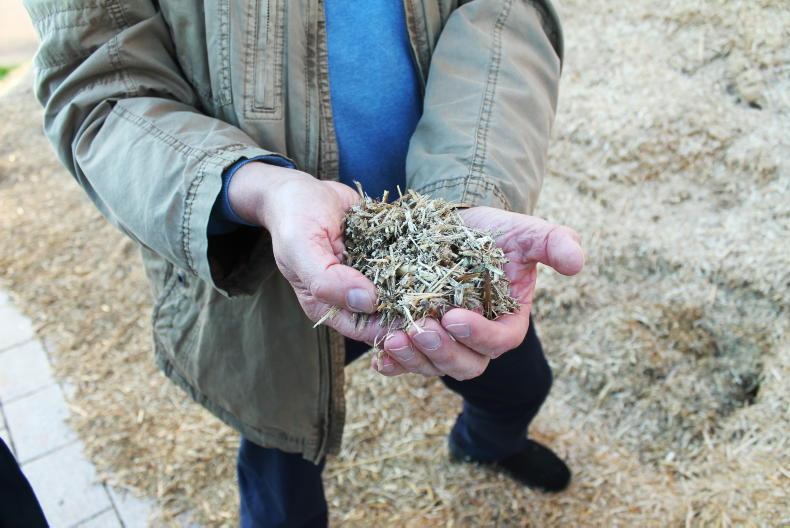
Dr. Thorsten Kraska pictured holding fresh miscanthus. \ Claire Mc Cormack
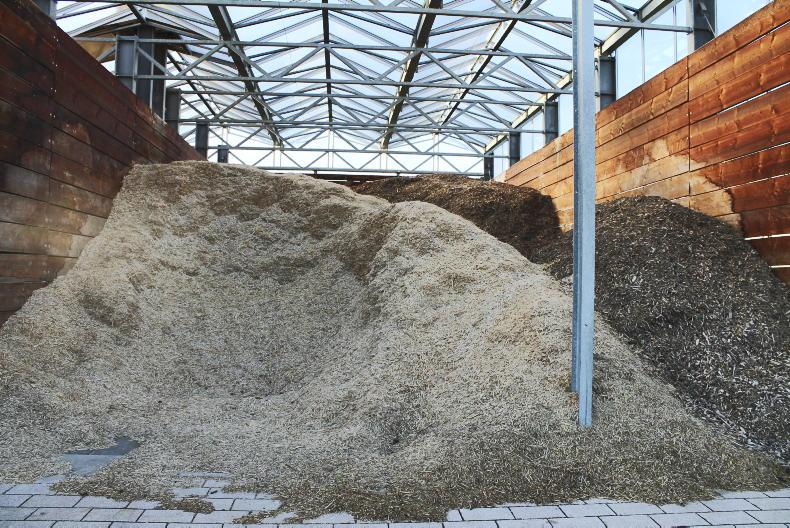
Miscanthus stored for trials at Campus Klein-Altendorf. \ Claire Mc Cormack.
After a major rainfall event more than a decade ago, German farmer Gerd Möhren decided to phase livestock out of his generations-old 70ha holding to grow miscanthus alongside his arable operation.
From the outset, he identified several advantages to growing the unique, tall, woody grass with high biomass potential that others, including his enterprising father, did not initially see.
It could heat his home, provide new bedding for horse owners, and potentially prevent his farm – located at the bottom of a steep valley in Bengen, in the district of Ahrweiler in Rhineland-Palatinate, about 30km south of Bonn – from future flooding risks.
Then, after a torrential rainstorm in the spring of 2012, which resulted in large amounts of humus-rich top soil being washed from erosion gullies of up to one metre deep that had formed on sloping maize fields surrounding Gerd’s farm and the local village of 500 inhabitants, he knew the time had come to fully commit to his vision.
Speaking to the Irish Farmers Journal during a visit to his farm with the European Network of Agricultural Journalists, the pioneering farmer reflected on his experience after selling the last of his 250-300 head of cattle in 2017.
“I had a normal farming system with cattle, but for the future the investment seemed too high, buying was very expensive, and I don’t have children, so I thought maybe it’s better to get out of livestock.
“Now it’s only wheat and miscanthus. I have 70ha on the farm, with 7ha in miscanthus.
“I have very good soil, and we have rainfall of 650mm per year. It is possible to make every fruit, wheat, or sugar beet here. The good soil is the reason why the miscanthus is very high here as well; it grows three to four metres tall.
“I planted the field behind me in 2012 because of heavy rainfall, which caused a lot of flooding damage to my farm and neighbours’ houses. We had a big problem on the surrounding fields, the soil and water flooded our homes. A technical protection was planned for the village, but it worked out to be very expensive and difficult. I thought it would be much cheaper to plant a miscanthus field.”
Miscanthus, which is a perennial grass, can store extremely large amounts of water and therefore offers, among other things, protection against flooding.
“I started by planting a strip of miscanthus across the slope, which has since prevented severe erosion. The miscanthus protected our houses from the last heavy rainfalls in 2016 and 2021.
“The villagers are very glad about it. It’s not the only solution, but it is a little part of the puzzle,” he said.
Miscanthus, commonly known as Chinese silver grass, is harvested in spring, with the crop remaining productive for 20 years, though harvesting is only possible from the second year of cultivation onward.
Gerd, who established his crop without subsidy, mainly markets the chopped material as bedding for horse owners and a growing substrate for strawberries and other potted crops. Miscanthus can also be used as a building material, in paper production, and as a fuel source.
Miscanthus crops protecting the village of Bengen on Gerd Möhren’s farm. \ Claire Mc Cormack
“You have one big starting price for miscanthus; it’s about €4-5,000 per hectare, but you must do it for 20-25 years because you have 20 years’ harvest.
“Miscanthus has a very big root system; it goes deep and to the sides. When you grow it, the roots look like ginger. You put one to two per square metre in the soil, which sounds like a small amount, but it grows and builds a big circle in front of the roots.
“During my first year I also bought some miscanthus product to start a small market, instead of waiting two years until my biomass was ready. I wanted a system that would allow me to grow and move quickly.
Miscanthus farmer Gerd Möhren pictured in steep fields overlooking his farm and village in Bengen. \ Claire Mc Cormack
“It was delivered in a big truck that couldn’t fit down the very narrow road to my farm. The driver tipped it out in front of my house. Then came a really big rain. I thought it was a disaster, that the miscanthus would be destroyed. But it wasn’t. Just the surface layer was wet; all underneath was completely dry. So straight away I knew rain was not a problem.
“I spoke to horse owners who didn’t know miscanthus could be used as bedding. It is used in other places in Germany, but here there was no knowledge about it.
“I asked if they could use it for one time to see what they think. They found it very good, soft and dry for the horses, with no ammonia smell in the stable.
“Now I have 15-20 customers within a 30km radius. Some want a big package; others want one truck every week.”
For Gerd, the early investment, initial uncertainties and questioning looks, have ultimately paid off.
“The first year was more work than money, but over time it’s possible to make good money.
“We have a very good price for miscanthus now [speaking in late September 2025], while the price for wheat or sugar beet is very low.
“In April when we harvest, the miscanthus will be very brown and very dry, so we will machine harvest it. We’ll store it in a hall to protect it over the winter.
“The only challenge is that miscanthus has a very big volume – one tonne of eight cubic meters. But because you only harvest once a year, as a farmer you have time to make your own market and get a better price.
“The price in 2025 was €200-250/t or maybe €300/t. If you’re less fortunate, maybe €150/t.
“It also depends on how you sell it. If you get a big transporter, it’s much cheaper, but if you package it as a farmer and distribute it, that makes it more expensive.”
Gerd collaborates with University of Bonn scientists, providing his miscanthus fields for trials on cultivation and heavy rainfall protection. The “MisKa-Re” project is investigating how miscanthus may reduce surface runoff compared to conventional arable land due to its longer vegetation periods, deep roots, dense mulch and increased earthworm activity.
Asked why he thinks more farmers have not yet adopted planting miscanthus, Gerd replied: “In Germany we say, ‘What the farmer doesn’t know, he doesn’t eat.’ Growing miscanthus is a little bit new or different, and it is very expensive to get started. But you can split it over the years; that is difficult to understand for some farmers.
“You must also be a marketer; selling the product is your problem. You must have a system to make money with it, but the farmer often doesn’t know how to do that.”
Gerd, who intends to expand his miscanthus production, hopes that the potential of miscanthus in flood protection will be recognised by the local municipality and even lead to remuneration. For him, this would be confirmation of his concept.
“Innovation doesn’t work in practice if farmers don’t implement it. Miscanthus has provided new security for my farm and the local community; it has given us another leg,” he concluded.
Steep fields surrounding the village of Bengen, in the district of Ahrweiler in Rhineland-Palatinate, about 30km south of Bonn. \ Claire Mc Cormack
Miscanthus mix set to replace peat for German growers
Researchers in Germany believe a combination of miscanthus, compost and coconut fibres can provide a sustainable alternative to peat substrate for the country’s fruit and vegetable growers.
The positive results are emerging at the Institute for Crop Sciences and Resource Conservation at the University of Bonn, where trials on miscanthus as a substrate have been ongoing since 2015.
It comes as the German government says peat levels in food production must be reduced by 50% by 2030 under environmental targets.
Although each potential substrate has unique challenges, speaking to the Irish Farmers Journal, Dr Thorsten Kraska, lecturer at the Institute for Crop Sciences and Resource Conservation at the University of Bonn, explained why he believes miscanthus can play a key role in future advanced substrate mixes.
“Everyone is searching for a resource that is on a big scale, easily available and constantly of quality.
“Now we are thinking the best solution is a mixture of miscanthus and compost, with a small amount of coconut fibres to capture enough water to develop the plant.
“Miscanthus can be produced here in Germany on a large scale. Each hectare will produce around 20-25t of dry matter each year.
Dr. Thorsten Kraska pictured in greenhouses at Campus Klein-Altendorf of the University of Bonn, where trials on miscanthus substrate are taking place. \ Claire Mc Cormack
“We calculated what the cost would be. Assuming that one metre of strawberry production would cost roughly €1 of substrate, you would have €10,000 per hectare. With miscanthus compost material, we estimate a cost of €0.75 per metre, so that is 25% cheaper.”
While Dr Kraska says it will take at least another 10 years to get the research right on food production using miscanthus as a substrate, he says “a tailored supply chain” also needs to be built.
“For complete sustainable use of miscanthus, we need to think about what we do with the substrate after it has been used.
“We need a grower producing and processing the miscanthus, a grower willing to use it, and a third actor willing to recycle the waste—that will be the future.
“But this is not the thinking at the moment because everyone is trying to optimise their processes – people don’t want to pay to optimise their own process and also pay extra to recycle it again; that is an economic problem we must address.
“Miscanthus is not the only solution; we have several other choices. I’m confident that in two to three years the industry will produce a substrate that is available on a large scale, and you can produce tomatoes, strawberries, or any kind of crop you’d like.”
Strawberries growing in a miscanthus and compost substrate mix at Campus Klein-Altendorf of the University of Bonn. \ Claire Mc Cormack
Dr. Thorsten Kraska pictured holding fresh miscanthus. \ Claire Mc Cormack
Miscanthus stored for trials at Campus Klein-Altendorf. \ Claire Mc Cormack.







SHARING OPTIONS