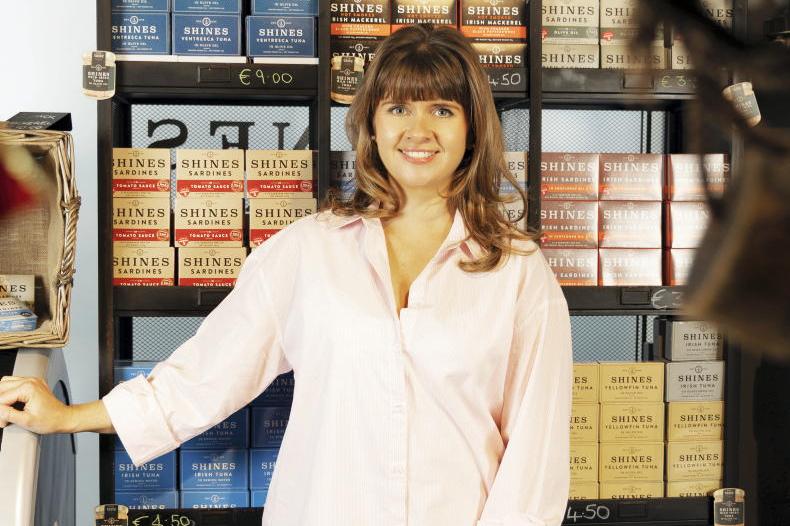
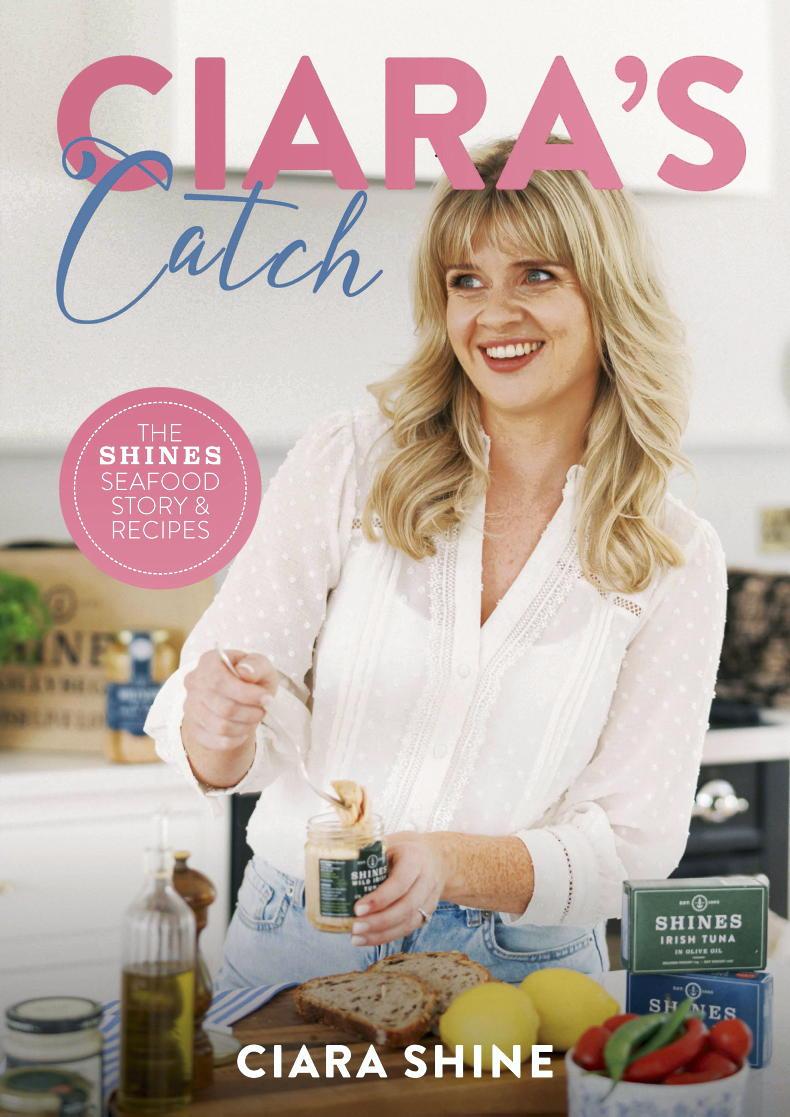


On 22 October, at the Irish Food Writing Awards, Ciara Shine of Killybegs, Co Donegal was named the winner of the Writing on Irish Seafood award for her cookbook, Ciara’s Catch, which was released in late 2025. The young entrepreneur, alongside her parents John and Marianne, operates Shines Seafood; specialising in quality tinned seafood like Irish Albacore tuna, North Atlantic mackerel and premium Brisling sardines.
The Shines have deep roots in the Irish fishing sector – from fishing to operating a local fish and chips shop and working the counter at the local fishmongers. Ciara’s book helps tell the story of Irish seafood in an accessible way we can all get on board with.
“I thought maybe the book could be a huge educational piece; something we could take to schools to teach children about seafood,” she says. “But I’m not a teacher, it was never going to be a textbook. I scaled things back to something more manageable. Not necessarily bite-sized, but informative.
“If someone’s reading something that they might not have a lot of knowledge in, these kinds of topics [like sustainable seafood] can be quite overwhelming,” she adds. “I broke it down into pieces and just started writing. I probably spent six months just mucking around with it; putting pen to paper.”
Incredible feedback
The idea for the book coincided with a seafood-focused visitor experience the family launched in 2024. Their interpretive centre, which was supported by Bord Iascaigh Mhara (BIM) and the Brexit Blue Economy Enterprise Development Scheme, has been a hugely successful way to educate visitors on the fishing industry and the kinds of fish we catch in Irish waters.
products. \Clive Wasson
“We had [previously] started giving people talks, just in our storage facility in Killybegs,” Ciara explains. “Our first experience was very rough and ready, but we spoke in really basic terms about the types of fish caught in Ireland and why our product line is different.
“I can’t stress how basic it was, but the feedback after was incredible, what people got from those small bits of information.
“To me, it would be common knowledge, but to the layperson it’s really not,” she continues. “It got me thinking about the book and I realised it didn’t need to be a wild overload of information. We have always dealt with brand ambassadors and some incredible chefs and food professionals up and down the country, so I said I’d ask if anyone would like to submit a recipe for the book. Again, the feedback was amazing – we got over 30 featured recipes.”
After many months of writing, photography and compiling all of these recipes, the book was ready to launch. Ciara self-published with support and advice from PR specialist Barbara Collins and Kristin Jensen of Nine Bean Rows Books. The book is being sold on the Shines Seafood website (shinesseafood.ie) and in select shops around the country.
“Barbara has a recipe in it, Paula McIntyre has a recipe in it. The Gastrogays have one, Irish Mammy Cooks has one. I was able to give everybody a small piece about them and our connection to them, and I really enjoyed writing those pieces.”
Establishing Shines
The Shine family have always appreciated quality seafood and during family holidays would often indulge in local specialities. Ciara vividly recalls a trip to the Basque region in Spain, a place where items like tuna, sardines and even sea urchin feature regularly in pintxos bars (the Basque version of tapas, or small plates). She asked her father why they couldn’t get tuna in Ireland the way it was served in Spain. This got the wheels in her father’s head turning and in 2014, Shines Seafood was launched.
They started off small, using just Irish-caught Albacore tuna and having it processed and tinned in Northern Spain, where the seafood canning industry is well established and the quality they wanted could be consistently maintained.
Once their line of tuna was established, they branched out to winter mackerel and premium sardines. Today, they sell their products in over 600 shops around the country. They ensure their fish are only ever caught in-season.
Each year, Ireland is allocated a quota to fish seasonally (usually in August and September) for Albacore tuna and this quota must be strictly adhered to for future stock protection. The tuna are migratory fish and travel north each year to breed – Irish fishers in the southeast use traditional fishing methods, but with improved technology to help avoid bycatch (the other types of fish caught while attempting to catch tuna).
“When we found out Ireland had a quota and could catch Albacore tuna it was thrilling for us,” Ciara says. “But like any good idea, we needed to find a way to make this business work.
“As a family, we were motivated by our own selfish desire to have these products in our own homes,” she adds.
When it comes to mackerel, the Irish fishing quota was cut by 71% in 2025 due to lowering stocks, largely thanks to overfishing by non-EU fishing vessels in international waters. To address this shortage, most other businesses have been selling a slightly different species, Jack mackerel, from Peru. Shines continued to support the North Atlantic fishery despite an increase in price.
“It wasn’t just in Ireland [the quota was lowered],” Ciara says. “Quotas all over the world were impacted. We use the North Atlantic mackerel known as Scomber scombrus. The two species are similar, but the Jack mackerel is softer in texture and not as flavourful. The mackerel we use is caught during the winter months, when the quality is at its best – that’s our baseline. We won’t sell anything else.”
Eat tinned fish
Eating tinned fish is one of the most sustainable ways we can enjoy seafood. Once the fish is preserved, its shelf life is years long and the nutrients – including those fantastic Omega-3 fatty acids – are well contained. In countries like Portugal and Spain, tinned fish is extremely popular and meant to be enjoyed in a variety of ways.
The Shines have adopted this approach and offer their tuna, mackerel and sardine products with interesting flavours, like chilli oil or jalapeno-infused tomato sauce.
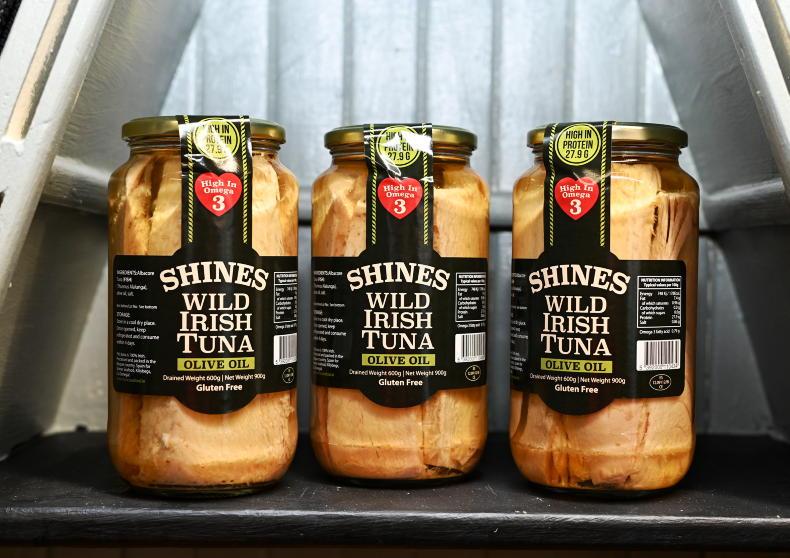
That said, some of their best-selling products are their simplest. Their wild Irish tuna preserved in spring water celebrates the fish for what it is: meaty, well-textured and deeply flavoursome.
Going a bit further, Shines recently launched their tinned Irish Tuna Ventresca, which is the belly of the tuna (toro, if you’re familiar with types of Japanese sashimi) preserved in olive oil. This tuna is currently only available online. The belly of the tuna is considered to be the finest part of the fish and, as a result, it often commands a higher price (Shines sell theirs for €9).
Of course, eating more tinned fish isn’t going to be good for sustainability if you aren’t sure where the seafood was caught or how it was produced. When you buy from a local business you’re not just helping them and their community thrive – they also tend to offer a higher level of traceability for their product line.
“I always say, if you want to try and shop more sustainably, try to buy something Irish or produced close to home,” Ciara says. “I’m very open about the fact that we have our fish processed in Spain and Scotland, but we source as Irish, or close to it, as possible and similar products tend to be processed even further afield [like in Morocco, the Middle East or Thailand]. When it comes to shopping more sustainably, just look at how far away it came from.”
Ciara’s Catch is available from shineseafood.ie, €9.99