




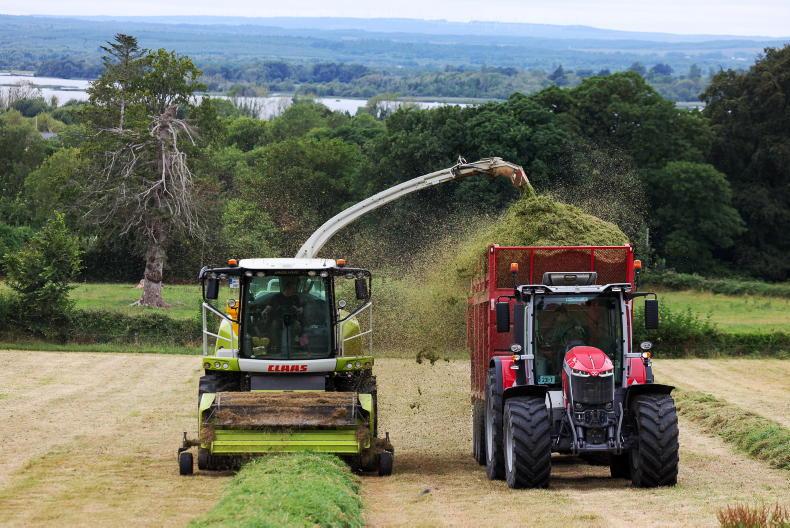
Most dairy and drystock farms are on target for adequate winter fodder supplies following the completion of first silage cuts.
However, approximately 15% of these farms have less than 40% of their winter feed requirement on hand in July, Teagasc has found.
Teagasc advisers completed almost 500 preliminary winter fodder budgets over the last number of weeks.
Looking forward, Teagasc has said that normal to average July to September grass growth, plus adequate yields of second-cut silage, should leave the majority of livestock farms in a relatively secure position.
Those farms with larger deficits require significant increases to secure feed supply in the coming months, it added.
Critical message
“It remains to be seen how second-cut yields will affect the final budget on these farms. There was no clear pattern of scale, location or enterprise to characterise farms with significant feed deficits,” according to Teagasc.
“This indicates that individual farm management decisions - and not weather or land type issues - may be the primary factor determining feed budget balances.
"A critical message arising from the survey is for all farms to engage in a fodder assessment for the farm and put steps in place to make up on supply deficits before the winter.
“Taking second cuts at the right time and planning for building grazing covers for the autumn are key decisions in the weeks ahead.”
Regional issues
Commenting on the results of the survey, Teagasc survey co-ordinator Joe Patton said: “The survey shows all regions are in a good position for this time of year.
"There were some regional issues with growth rate in early summer, but, overall, farmers have managed to build silage stocks quite well so far.
"Of course, the situation could change depending on second-cut yields and autumn weather, but, for the most part, the situation is good.
“Teagasc recommends carrying a rolling silage surplus of 25% to 30% as a buffer. Many farms should be able to reach that level this year with correct management,” he said.
Data
The data was collected on farms from mid-June to early July, after completion of first silage cuts.
The working targets for this stage of the year are for dairy herds to have at least 70% of silage on hand and for drystock farms to have at least 75% to 80% of silage on hand.
Second-cut crops and other additional forage stocks will be added to final budgets in September. Budgets were completed using the fodder budget function on PastureBase Ireland and were collated by region.
The data was presented on Wednesday 19 July to the National Fodder and Feed Security Committee.



SHARING OPTIONS