


Grassland management
This week’s improvement in weather has thankfully provided an opportunity for flocks lambing to get ewes and lambs out. Ground conditions remain hugely variable owing to the volume of rainfall last weekend. Many farms have good covers of grass but in areas which received the heaviest rainfall, utilisation is proving challenging. A balance will need to be achieved between trying to graze out paddocks to promote high-quality regrowth, minimising damage and ensuring the lactating ewes’ nutritional requirements are met.
The latter is a vital aspect and, where utilisation is poor and grass dry matter is low, then concentrate supplementation may be required for a period to underpin performance. Feeding a low volume in the region of 0.3kg for single-lactating ewes and 0.5kg to 0.6kg to twin-suckling ewes in good body condition will prove beneficial. It will also help guard against grass tetany. Heavy covers, which are proving difficult to graze out without soiling the sward and hitting intake, can be partially grazed for now and grazed tight at the next grazing when ground conditions improve and grazing groups are bigger or temporary fencing can be used. The ideal approach is giving sheep access to a smaller area so that even where ewes are forced to graze down lower for 12 to 18 hours, performance will not be overly affected, where sheep are subsequently turned onto good-quality grass. Where ground conditions and grass supplies are good then there will not be a need for concentrate supplementation, with grass more than capable of satisfying nutritional demands. In such cases, it is important to provide lactating ewes with magnesium supplementation.
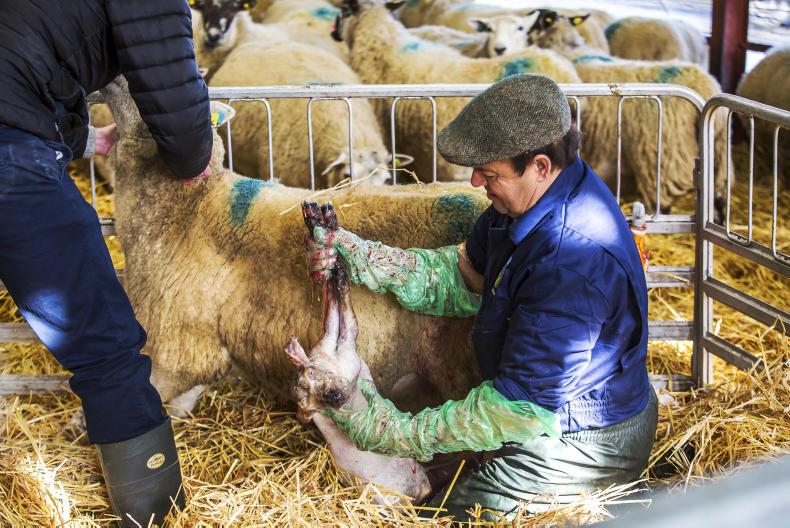
Difficult lambings
Reports in some flocks point to a higher incidence of lambing assistance stemming partly from ewes in better body condition and the birth of large lambs. It is advisable to use lubrication gel rather than washing up liquid as the latter can actually reduce moisture in the process of making suds. Using a lambing aid or cord which allows the head to be eased forward with the legs will also help. Remember also to administer aftercare (anti-inflammatory or antibiotic treatment) to the ewe if required.
Refocus on hygiene
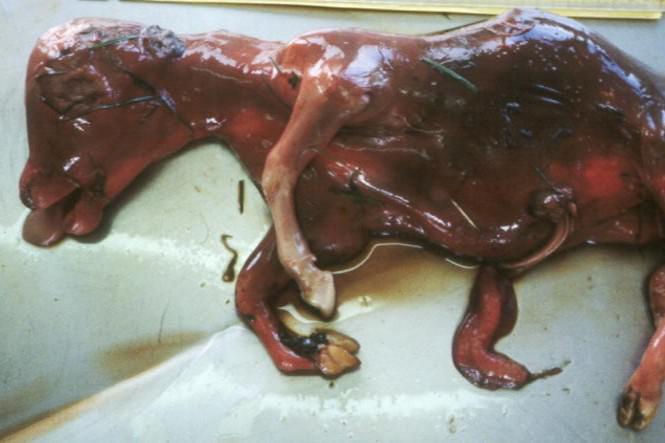
Flocks which were in peak lambing during last week’s inclement weather were put under intense pressure with space at a premium. The first opportunity should be taken to get lambing pens cleaned and disinfected to minimise the risk of disease occurring. Where there has been an outbreak of disease such as E-coli scour, antibiotic treatment of newborn lambs may be an option prescribed by your vet but the focus should also remain on ensuring lambs receive sufficient colostrum. Triplet and quad-born lambs will face the greatest risk as will lambs born to ewes with an inadequate milk supply.
These lambs should receive ewe colostrum along with a top-up of alternative colostrum (milked from other ewes, cow colostrum or a colostrum alternative). Getting ewes and lambs outdoors quickly will also help in such a scenario to limit the spread of disease. Hygiene considerations should be applied to group lambing pens as well as individual lambing pens, although group pens will not be as easily cleaned. Here the focus should be on disinfecting and keeping straw topped up regularly.



SHARING OPTIONS