Organising fertiliser accounts for Nitrates Derogation
The next few weeks in an opportune time to get soil samples taken in advance of the application period for slurry and chemical fertiliser opening in early January.
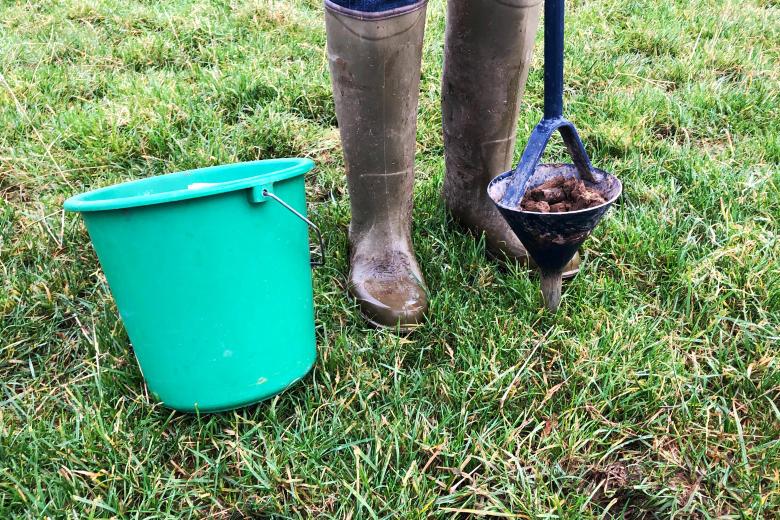
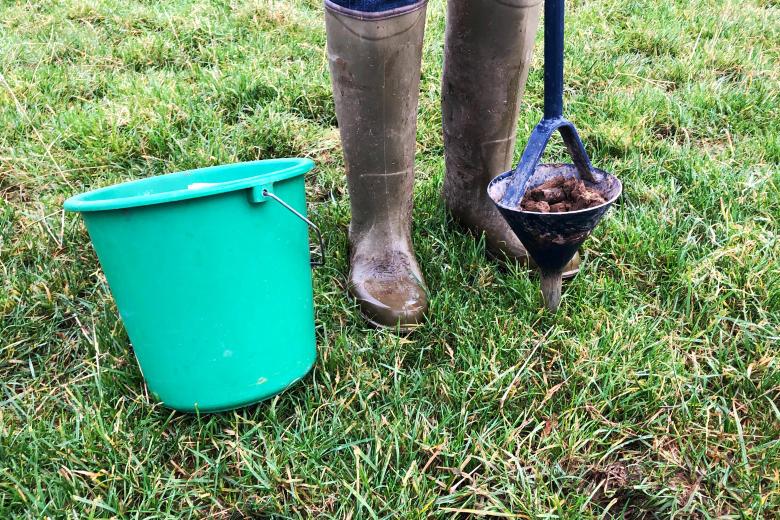
Soil samples should be taken in a W shape taking care to avoid areas which are uncharacteristic of the land.
ADVERTISEMENT
The Nitrates Derogation is a vital facility allowing in the region of 7,000 farmers to exceed the organic nitrogen limit of 170kg/ha and farm to an upper limit of 250kg organic N/ha. As part of the approvals process, farmers must submit an up-to-date fertiliser plan and submit annual fertiliser accounts before 31 March each year for the preceding year.
For example, farmers are required to submit fertiliser accounts for 2019 before 31 March 2020. Plans must include the following elements:
The crop rotation plan, which must specify the area (ha) of parcels with grass and parcels with other crops including a sketch map indicating the location of parcels.
The number of livestock, a description of the housing and storage system, including the volume of manure storage available and a farmyard sketch.
A calculation of manure N and P produced on the holding.
The amount, type and characteristics of manure delivered outside the farm or to the farm;
The foreseeable N and P crop requirements for each parcel.
The results of soil analysis related to N and P soil status if available.
The nature of the fertilisers to be used.
A calculation of N and P from manure over each field.
A calculation of nitrogen and phosphorus application from chemical and other fertilisers over each field
The terms and conditions also state that where any changes to agricultural activity take place, the plan must be revised no later than seven days following the changes to ensure consistency between the plan and the agricultural practice.
ADVERTISEMENT
Soil analysis must be updated at least every four years with one sample covering a maximum of four hectares of land. To get an accurate reading, samples should not be taken where organic manures or chemical phosphorus or potassium fertiliser has been applied in the previous three-month period.
Samples should be taken in a W shape taking care to avoid areas that are uncharacteristic of the field such as supplementary feeding points, gate entry points etc.
Register for free to read this story and our free stories.
This content is available to digital subscribers and loyalty code users only. Sign in to your account, use the code or subscribe to get unlimited access.
However, if you would like to share the information in this article, you may use the headline, summary and link below:
Title: Organising fertiliser accounts for Nitrates Derogation
The next few weeks in an opportune time to get soil samples taken in advance of the application period for slurry and chemical fertiliser opening in early January.
The reader loyalty code gives you full access to the site from when you enter it until the following Wednesday at 9pm. Find your unique code on the back page of Irish Country Living every week.
CODE ACCEPTED
You have full access to the site until next Wednesday at 9pm.
CODE NOT VALID
Please try again or contact support.
The Nitrates Derogation is a vital facility allowing in the region of 7,000 farmers to exceed the organic nitrogen limit of 170kg/ha and farm to an upper limit of 250kg organic N/ha. As part of the approvals process, farmers must submit an up-to-date fertiliser plan and submit annual fertiliser accounts before 31 March each year for the preceding year.
For example, farmers are required to submit fertiliser accounts for 2019 before 31 March 2020. Plans must include the following elements:
The crop rotation plan, which must specify the area (ha) of parcels with grass and parcels with other crops including a sketch map indicating the location of parcels.
The number of livestock, a description of the housing and storage system, including the volume of manure storage available and a farmyard sketch.
A calculation of manure N and P produced on the holding.
The amount, type and characteristics of manure delivered outside the farm or to the farm;
The foreseeable N and P crop requirements for each parcel.
The results of soil analysis related to N and P soil status if available.
The nature of the fertilisers to be used.
A calculation of N and P from manure over each field.
A calculation of nitrogen and phosphorus application from chemical and other fertilisers over each field
The terms and conditions also state that where any changes to agricultural activity take place, the plan must be revised no later than seven days following the changes to ensure consistency between the plan and the agricultural practice.
Soil analysis must be updated at least every four years with one sample covering a maximum of four hectares of land. To get an accurate reading, samples should not be taken where organic manures or chemical phosphorus or potassium fertiliser has been applied in the previous three-month period.
Samples should be taken in a W shape taking care to avoid areas that are uncharacteristic of the field such as supplementary feeding points, gate entry points etc.
If you would like to speak to a member of our team, please call us on 01-4199525.
Link sent to your email address
We have sent an email to your address. Please click on the link in this email to reset your password. If you can't find it in your inbox, please check your spam folder. If you can't find the email, please call us on 01-4199525.
ENTER YOUR LOYALTY CODE:
The reader loyalty code gives you full access to the site from when you enter it until the following Wednesday at 9pm. Find your unique code on the back page of Irish Country Living every week.








SHARING OPTIONS